





Should I Repair or Replace My Roof?: How to know whether to repair a damaged section or invest in a new build
September 25, 2026 | By Pat Ward
You’re starting to give your roof a second look. Is that a loose shingle? Maybe you think you see some algae growth, or you’ve spotted some asphalt granules in your gutters. How do you know when these things are a sign to repair or replace your roof?
At C&L Ward, we’ve helped homeowners answer these same questions across more than 3,500 roofing jobs. We use real photos from our job sites in this article to help you recognize what you might be seeing on your own roof, and identify if it’s a sign to repair or replace.
Table of Contents
What Factors Determine If A Roof Repair Or Replacement Is Best For My Home?
There are a handful of key factors to consider when deciding if a roof replacement or repair is the best fit for you:
- Age
The age of your roof is one of the most important details to consider. A newer roof likely still has a good foundation and may not need to be fully replaced. If your roof is 15 years old or less, repair is typically the best option; if it is older than 15 years, lean towards a replacement.
- Leaks
Water damage or leaks can show up in a few ways. You might notice stains on your ceiling or walls, mold, or wet insulation. If you spot a leak, you should call in a professional to conduct a full inspection and identify the source.
- Exterior Damage
Exterior damage can make itself known without an inspection, though a professional assessment will still be necessary to further evaluate your roof’s condition. Still, you might be able to spot moss, dark streaks, or algae on your roof on your own. You may also be able to see curled, missing, split, or damaged shingles without a ladder.
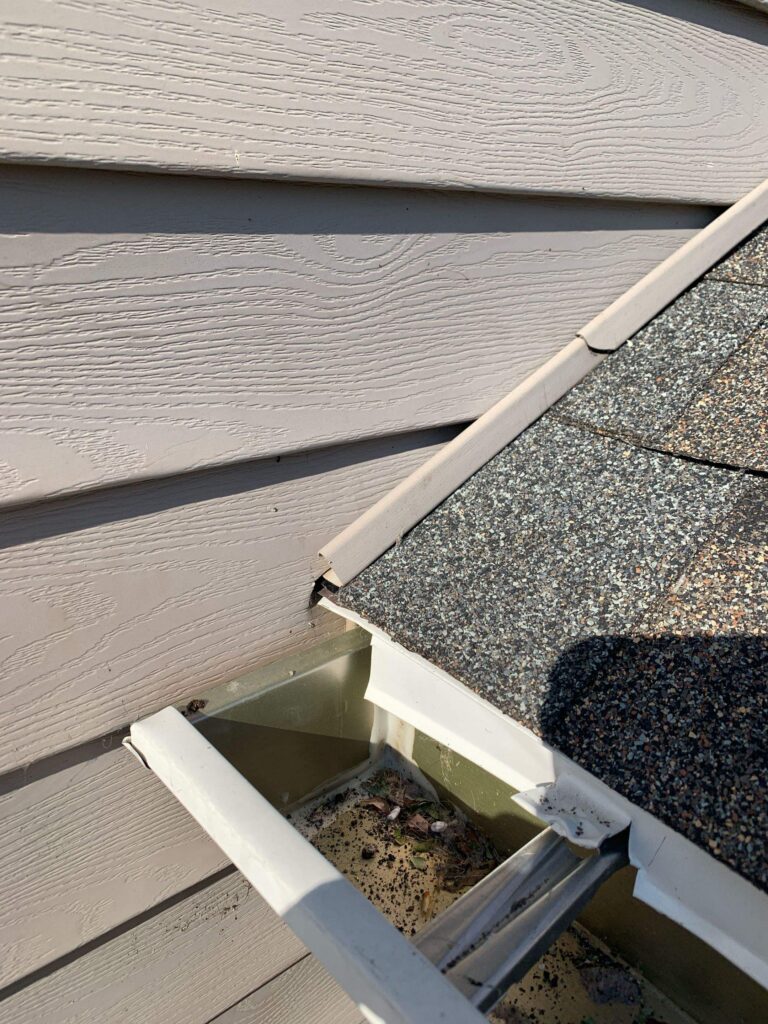
Shingle granules in a gutter.
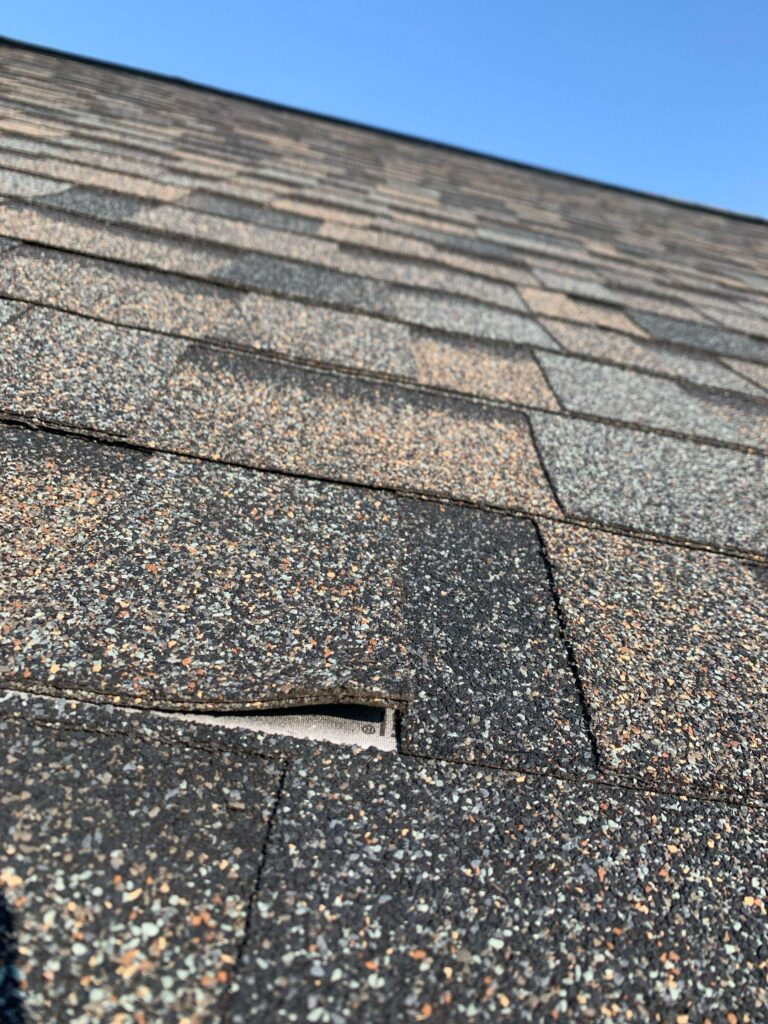
A lifted shingle.
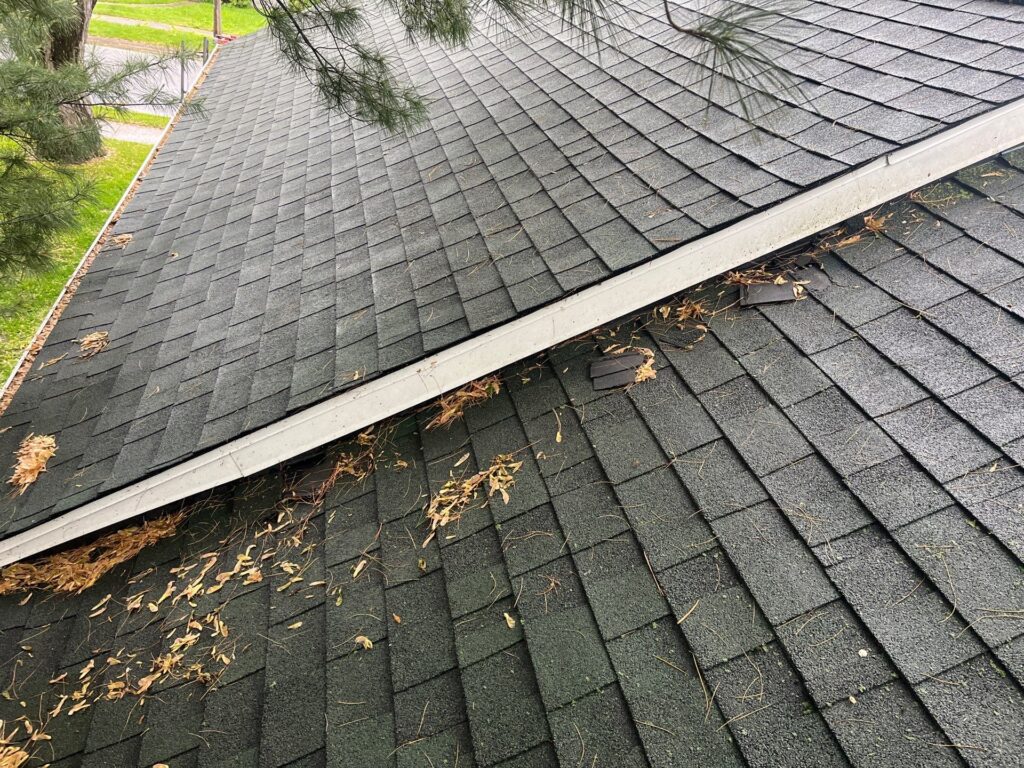
Cracked and fallen shingles.
- Affected area (size)
Leaks and damage can both be evaluated by their size. The smaller the affected area, the more likely that a repair is the better fit. A general rule of thumb is that if 25% or less of your roof is affected, a repair is the more cost-effective option. If more than 30% of your roof is damaged, it’s time for a replacement.
- Climate
It might sound odd, but the environment you live in can influence your timeline and whether a roof repair or replacement is best for you. If you live in an area with frequent storms, severe weather, or extreme temperatures, it’s important to address roofing issues quickly.
An unexpected hailstorm could damage your roof. Since Michigan doesn’t get too many hailstorms, getting an inspection might not seem too pressing afterward. But what starts as a ‘little’ hail damage can become a much bigger—and more expensive—fix after a Michigan winter.
In other words, smaller, repairable damage can turn into a bigger problem the longer it sits unaddressed and exposed to the elements. The harsher the season, the faster this deterioration can occur.
How Do I Know When to Choose a Roof Repair or a Replacement?: Quick Comparison Chart
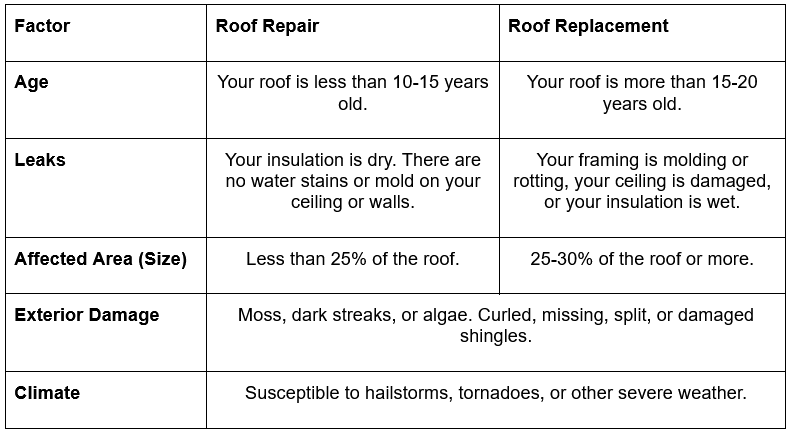
If you’re still unsure, or want to double-check, take our quick and easy Roofing Quiz: Repair or Replace? to get an answer and further recommendations.
When Is a Roof Repair A Good Solution?
If your roof is less than 10 or 15 years old, a repair may be a good solution. So long as the rest of the roof is in good shape (no leaks, mold, or damaged shingles) and the affected area is confined to a small portion (25% of the roof or less), repairs can be a cost-effective option.

Before repair
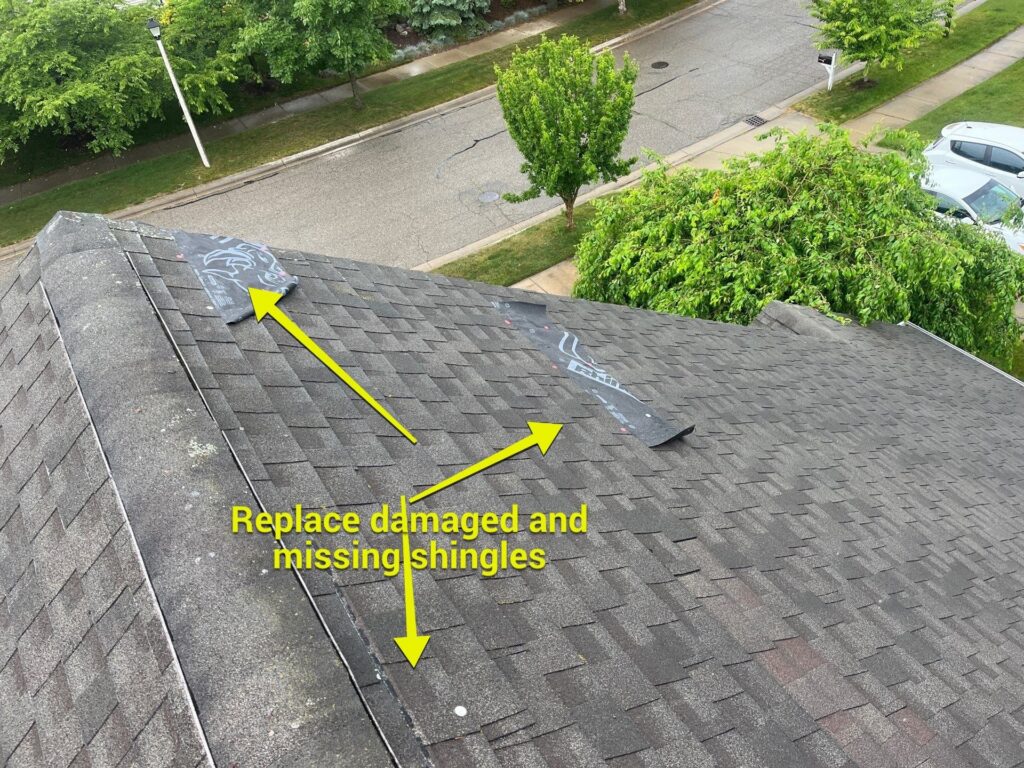
During repair
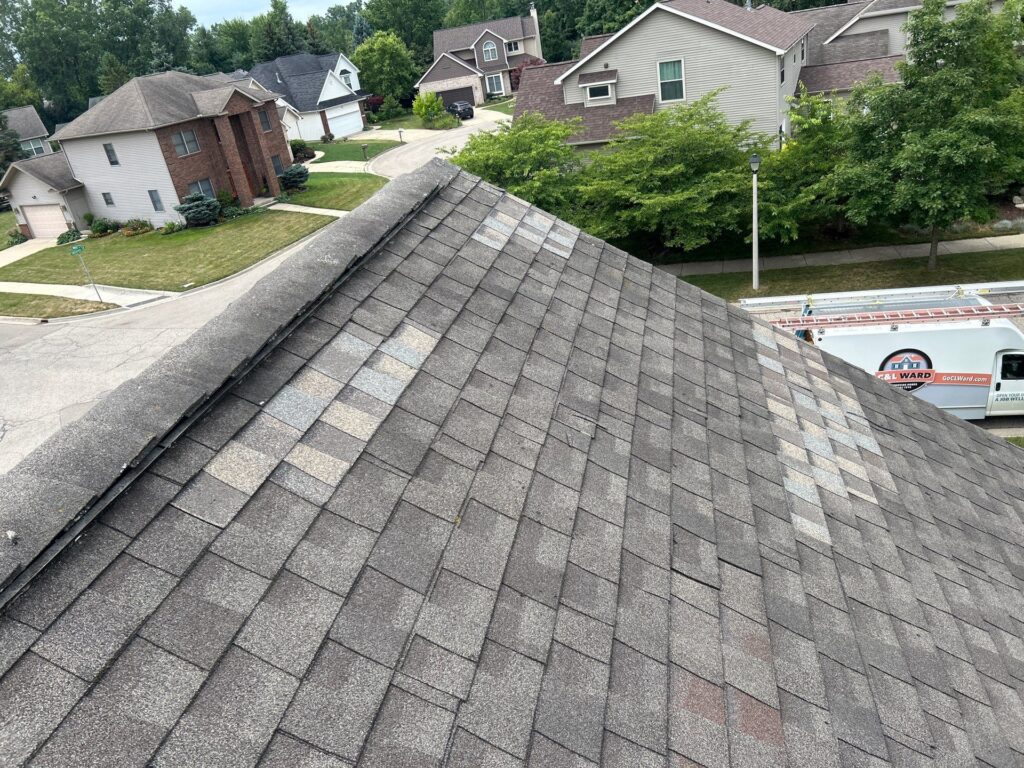
After repair
How Do I Know When I Should Replace My Roof?
If your roof is more than 15 years old, or has reached its expected lifespan, it might be time to consider a replacement. Extensive water or shingle damage (30% or more of the roof) is also a signal to replace.
Repairing a damaged roof might cost a little less at first, but making slow, as-needed repairs can quickly add up. It can cost far less to replace your roof in full than to repair a slowly failing system.
When Is A Roof Repair Not The Right Fix?
A repair is not the right fix if the damage to your roof is extensive, or when there are underlying problems beneath your shingles.
If a quarter of your roof or more needs attention, odds are your whole roof will need care in the near future. Paying to fix your whole roof in one project can be less expensive than calling an installer out for a repair now, followed by a few subsequent repairs.
When Not To Replace A Roof?
Don’t replace your roof if your roofing system is structurally sound and overall in good condition. Unless you want a new color or something that a repair can not address, you don’t need to pay for a full replacement if a certified professional recommends a repair.
What Are The Financial Considerations Of Roof Repair vs. Roof Replacement?
Cost can be a real consideration when deciding how to address your damaged roof.
If you need a replacement, but can’t get one, a repair is a fine compromise. It can help mitigate the issue and give you time to prepare.
Never settle for a repair if you need and are able to afford a replacement; it will cost more in the long run.
Comment
by u/Own-Tip-532 from discussion
in HomeImprovement
You can learn more about the cost of a roof in our article, “How Much Does a New Roof Really Cost in Michigan?” or what factors affect cost on C&L Ward’s Roofing Pricing Page.
Warranties & Coverage: Roof Repair vs. Roof Replacement (Plus How Repairs Affect Your Roof Warranty)
In some cases, your roof repairs may be covered by a warranty. If the damage results from a manufacturing defect, the manufacturer’s warranty should cover replacement materials and possibly labor. If the problem is a result of improper installation, a workmanship warranty should help to cover repairs.
Even if a repair is not covered by your warranty, the integrity of your warranty can still be preserved by hiring a manufacturer-certified contractor.
DIY repairs or repairs not performed by a manufacturer-certified installer will not be covered by your warranty. Depending on your warranty terms, either only the altered area may no longer be protected, or the full roof may lose its warranty coverage, based on the extent of the repair.
Note: A full roof replacement may be covered by your insurance in cases of fires, storms, or other uncontrollable acts. You can read more in our article, “Owens Corning Roof Warranty vs. Insurance: What’s Covered, What Isn’t, and When You Should File a Claim.”
Can I Inspect My Roof Myself?
You can do a preliminary roof inspection yourself. We don’t recommend climbing on your roof to do this; instead, we suggest walking around your home from ground level. You can use a pair of binoculars to take a closer look if needed, and a ladder to check your gutters for shingle granules if it’s safe to do so.
In addition to granules—dark specs that have fallen from shingles—look for moss or black streaks of algae, as well as any cracked, dented, lifted, or fallen shingles.
If you’re able to safely access your attic, you can also inspect your roof from there. Look for any light coming through the roof, especially in joints or seams around any chimneys or pipes. Use a flashlight to look for any rotted wood or damp insulation.
If your roof is older or you notice something you’re unsure about, be sure to call in an expert for a professional opinion.
How To Schedule A Roof Inspection
To schedule a roof inspection, contact a licensed and insured contractor to schedule an appointment. If you know who installed your roof, contact them first. Your product may be under warranty. If you know which shingle brand you have but not who installed it, set up an appointment with a manufacturer-certified installer.
If you’d like to learn more about roof repairs and replacements, visit our quick and easy Roofing Quiz: Repair or Replace? Page. Or, Schedule a Consultation with one of our experts. From there, we will be happy to conduct an inspection, share options, and answer any questions you may have.