





Owens Corning Roof Warranty vs. Insurance: What’s Covered, What Isn’t, and When You Should File a Claim
July 10, 2026 | By Pat Ward
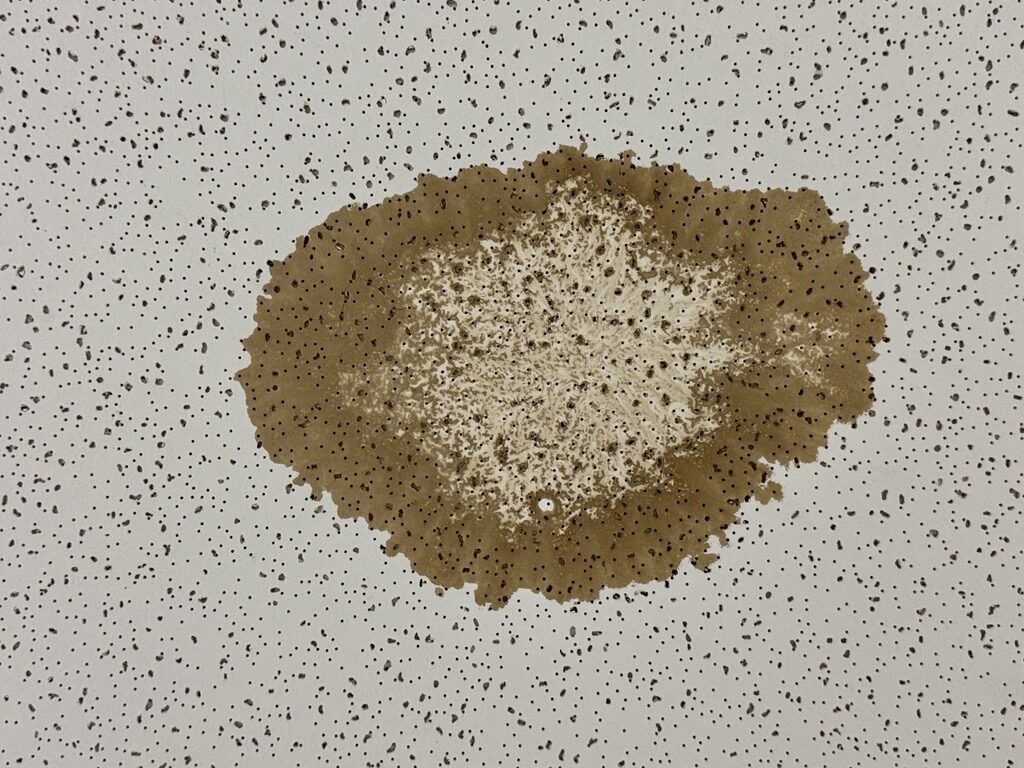
Water damage on a ceiling tile.
A damaged roof can lurk quietly above your home. Maybe a hailstorm hit your area a few months ago, but all seemed fine—until a leak made itself known. Perhaps you’ve spotted missing or peeling shingles. Now you’ve got two problems on your hands: a damaged roof, and figuring out who can fix it.
As an Owens Corning Roofing Platinum Preferred Contractor, we’ve completed over 3,500 roofing projects for Michigan homeowners since 1972. When problems arise, we’ve helped homeowners identify the cause and directed them to the correct solution. Sometimes, that’s a repair from us. In other cases, it comes from the manufacturer or an insurance claim.
In this article, we’ll explain the main differences between common warranties and insurance, when to use each, and what to do if you find a problem with your roof system. We look specifically at the Owens Corning Platinum Protection Limited Lifetime Warranty as an example.
This article is not legal advice. Our words do not replace written warranties provided by the product manufacturer; it is for educational purposes only. By the time you’re done reading, you’ll have a better understanding of how roofing protections compare and when to claim each.
Table of Contents
What Are the Differences Between Roofing Warranties and Homeowner’s Insurance Coverage?
There are many different types of warranties that cover product failures as a result of the manufacturing or installation process.
Below, we look specifically at the Owens Corning Platinum Protection Limited Lifetime manufacturer’s warranty and compare what it covers and when to file a claim to standard insurance and workmanship warranty coverage.
As the names suggest, a manufacturer’s warranty protects you from any defects or failures that are a result of the production process. A craftsmanship or workmanship warranty protects you from failures resulting directly from the laborer.
TIP: For a detailed breakdown of different warranties and the specific protections of each, read our article What are the Different Types of Home Exterior Improvement Warranties and What do they Protect?
Your homeowner’s insurance helps you recover from uncontrollable damages not a result of the installation or manufacturing processes. This can include hail, fire, or wind damage.
Warranties and insurance often do not include self-inflicted damages or accidents. If you attempt to clean or repair your roof (without following manufacturer instructions) and cause damage to the product, the cost of repair falls on you. Your roof may be protected from a storm-fallen tree, but not a tree you cut down on your own.
Typically, homeowner’s insurance does not cover earthquakes or floods [1]. It also does not cover failures or damages resulting from a lack of maintenance or normal wear and tear.
How Long Do Warranted and Insured Roof Protections Last?
Each warranty is different. The Owens Corning Platinum Protection Limited Lifetime Warranty on Woodcrest, Woodmoor, Duration, and Oakridge products is guaranteed for as long as you own your home.
The installer often determines the duration of a workmanship warranty. Owens Corning requires that the contractor be responsible for covering the first two years of workmanship on all Platinum installations. Workmanship performed by certified Owens Corning Roofing Platinum or Preferred Contractors is covered by a Limited Lifetime warranty and is prorated after 25 years.
As long as you’re paying for it, your homeowner’s insurance will cover you and your home. While you are not required to have this insurance in the United States, if you have a mortgage, you are likely insured.
What Are The Limitations of Warranties and Insurance?
Like any manufacturer’s warranty, the Owens Corning Platinum Protection Limited Lifetime Warranty comes with limitations. Acts of God, pre-existing conditions, underlying structural failures, improper or inadequate roof maintenance or ventilation, and other causes are not protected by this warranty.
This warranty only covers failures that are a direct result of the manufacturing process. It will not cover failures of labor, installation, or other circumstances outside of Owens Corning’s control.
Click to Read the Full OC Platinum Protection Limited Lifetime Warranty Limitations
WHAT IS NOT COVERED
Our warranty does not cover damage to the Owens Corning® Shingles or Products due to any cause not expressly covered in this limited lifetime warranty. After our shingles or products leave our manufacturing facility, they are subjected to conditions and handling beyond our control, which could affect their performance. This limited lifetime warranty does not cover any problems with non-defective shingles or products caused by conditions or handling beyond our control. Some examples of conditions not covered by this limited lifetime warranty include:
- Acts of God, such as hail, strong storms, or winds (including gusts) over the maximum wind speed listed in the “Limited Lifetime Warranty Information Table” at the end of this limited lifetime warranty, ice damming above the area covered by leak barriers or flashings, or snow or water infiltration through exhaust vents.
- Roof damage or leaks caused by pre-existing conditions, underlying roofing materials, underlying structural failures, settlement, or any defective areas on or near the roof that are not part of the Roofing System. Examples include but are not limited to chimneys with loose or cracked mortar, damaged siding, faulty counterflashing, or improperly designed or installed gutter or downspout systems.
- Foot traffic on roof or damage caused by objects (e.g., tree branches) falling on roof.
- Shading, variations in the color of Owens Corning® Shingles and, if applicable, Owens Corning® Hip & Ridge Shingles, or discoloration caused by algae, fungi, lichen, or cyanobacteria (unless covered under the section “What About Algae Resistance”).
- Improper or faulty installation of Roofing System by an installer other than an Owens Corning Roofing Platinum Preferred Contractor.
- Damage caused by improper or inadequate roof ventilation or roof drainage, unvented attics, or enclosed roof rafter assemblies.
- Damage caused by, or the cost to repair or replace, any non-Owens Corning® products, including but not limited to metal work, counter flashing, failed and/or corroded roof nails, or pipe boots that allow water to enter the structure or Roofing System.
- Damage to the Roofing System caused by alterations made after completion of application, including structural changes, equipment, or solar panel installation, power washing, painting, the application of cleaning solutions not in accordance with our algae removal instructions, coatings, or other modifications.
- Any damage due to debris, resins, or drippings from foliage.
- Improper storage, handling, or other conditions beyond our control; and
- Any costs incurred that are not authorized in advance by Owens Corning.
Your workmanship warranty will vary by contractor. Regardless of who you hire, a workmanship warranty will only cover the installer’s work. It will not cover any manufacturing defects. Be sure to ask a contractor for the details of their warranties before signing, and ensure you fully understand the terms and conditions.
Insurance covers a lot, but it won’t cover everything. Some insurance policies exclude hail damage, and require that protection to be purchased for an additional cost. Your insurance likely won’t cover anything that can be resolved through a warranty claim.
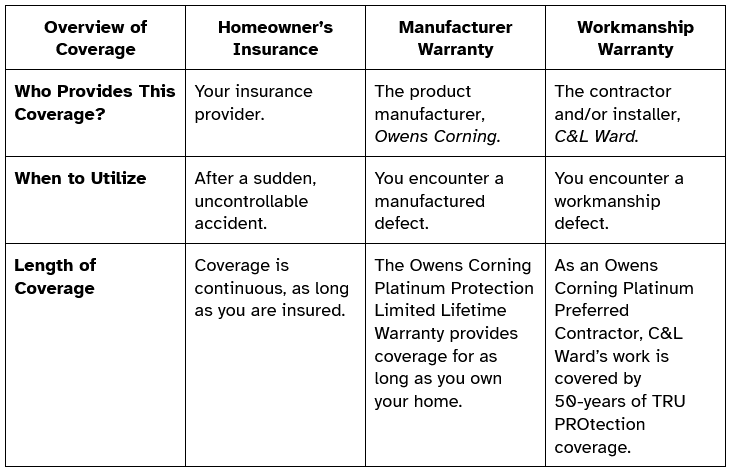
Quick Comparisons Chart: When to File a Warranty or an Insurance Claim?
Note that if you are ever in a situation where your warranty and your insurance both apply, you can only claim one. You will not be able to claim both a warranty and insurance benefits to resolve the same issue.
The table below provides guidance of when a manufacturer’s warranty, workmanship warranty, or homeowner’s insurance claim is most applicable.
What To Do If I’m Unsure Which Claim to Pursue?
If you’re ever unsure whether your needs are covered under warranty, simply ask your installer. If your work was performed by C&L Ward, you may Submit a Service Request online. We will perform an inspection and help guide you to the right solution for your situation.