





Vinyl, Composite, Wood, or Metal: Which Siding Material Is Best for Michigan Homes?
May 22, 2026 | By Pat Ward
What Different Siding Materials are There?
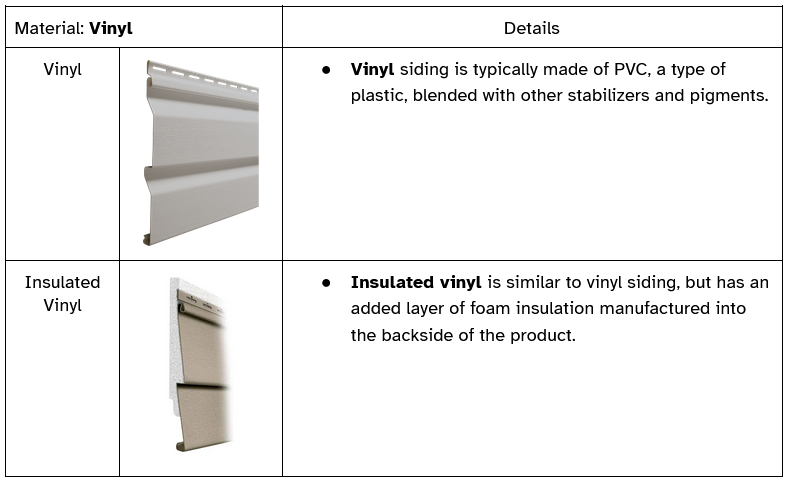
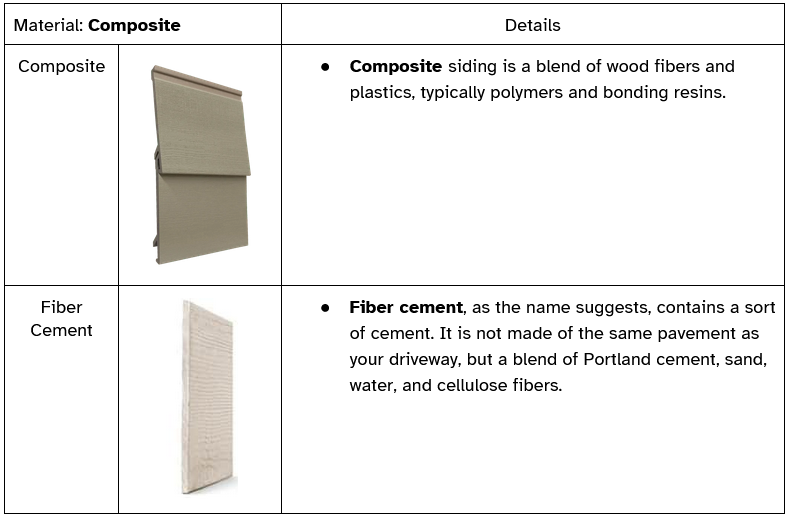
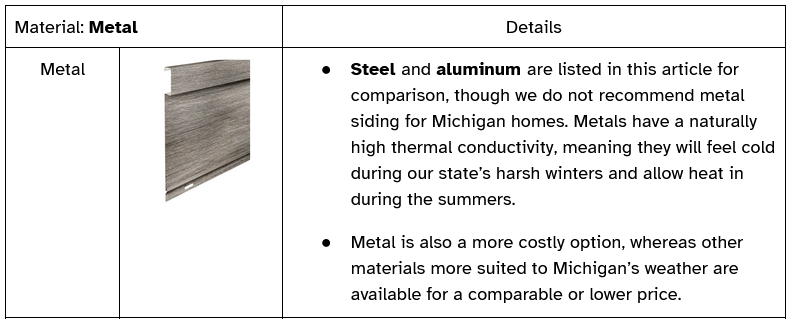
Siding comes in many different forms, with different blends of materials and features within each. For example, “metal siding” could refer to aluminum or steel, while “composite siding” could be a generic term or something more advanced, such as fiber cement.
Below, we’ll look at vinyl, composite, wood, and metal siding, as well as common types of each.

What Does New Vinyl, Composite, Wood, or Metal Siding Cost?
These cost estimates are based on professional contractors, but may not include installation costs, and do not include pricing for soffit replacement, fascia replacement, insulation, or housewrap.
- Vinyl
- About $4 to $14 per square foot, including installation. [1]
- Insulated Vinyl
- About $13 to $23 per square foot.
- Cost is about 1.5x to 2x more than vinyl siding alone.
- Composite
- About $17+ per square foot.
- Fiber Cement
- About $7 to $18 per square foot, including installation. [2]
- Engineered Wood
- About $14 to $27 per square foot.
- Cedar
- About up to $30 (premium cedar shake) per square foot. [3]
- Metal
- About $1 (tin) to $35 (copper) per square foot.
- Aluminum ranges from $3 – $18, while steel typically costs $4 – $16. [4]
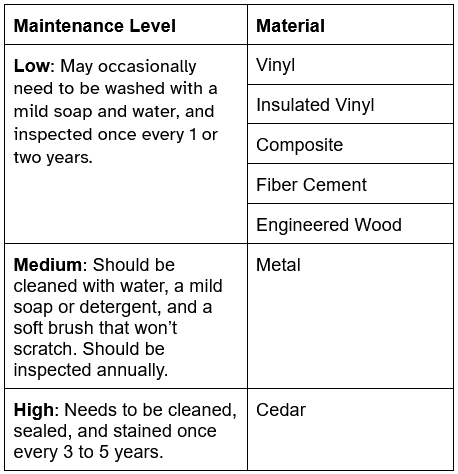
What Type Of Maintenance Is Required for Each Type of Siding Material?
What’s The Lifespan Of Each Siding Material in Cold Climates?
- Vinyl
- If installed and maintained correctly, vinyl siding can last from 20 to 40 years in Michigan.
- Insulated Vinyl
- As a type of vinyl siding, insulated vinyl siding can also last 20 to 40 years with proper maintenance.
- Composite
- Composite siding can last from 20 to more than 40 years, if installed properly and well-maintained.
- Fiber Cement
- Fiber cement siding is incredibly durable and can last for 50 years or more.
- Engineered Wood
- Engineered wood siding lasts 20 to 30 years.
- Cedar
- Cedar siding can last 60 years or more with proper maintenance, or as little as 20 years without.
- Metal
- Like metal roofing, metal siding has a longer lifespan than many of its counterparts. If well-maintained, metal siding can last 40 to 70 years.
How Weather-Resistant Are Vinyl, Composite, Wood, and Metal Siding?
- Vinyl
- As the temperature fluctuates, so does vinyl siding. This material expands and contracts during the freeze-thaw cycle (by over ½ an inch per piece!), making it prone to buckling, warping, or cracking if installed incorrectly. [5]
- Insulated Vinyl
- With an extra layer of added materials, insulated vinyl is more durable and less likely to warp or buckle than traditional vinyl as the temperature changes.
- Composite
- Composite siding made of inorganic materials is great for resisting water damage and mildew. It is also able to resist warping or swelling, and these inorganic materials make it more resistant to woodpeckers and pests.
- Fiber Cement
- Unlike vinyl, fiber cement doesn’t like to move. This can cause it to crack during Michigan’s freeze-thaw cycles, as the material can absorb water that later freezes into ice. [6]
- Engineered Wood
- Quality engineered wood can be incredibly durable in extreme weather, including thunderstorms and tornadoes. It can go undamaged by 1”+ hail and winds of 200 mph. [7] It is intended to resist moisture and can expand and contract with temperature fluctuations.
- Cedar
- Moisture, UV exposure, and Michigan’s freeze-thaw cycles can shorten the lifespan of cedar siding. Proper maintenance is essential to help cedar siding resist rot, pests, and moisture.
- Metal
- Metal siding will not warp or crack, and if finished correctly, should not corrode. It is resistant to moisture, rot, and storm damage.
Common Myths about Vinyl, Composite, Wood, and Metal Siding
- Vinyl Myth: “Vinyl siding isn’t energy-efficient.”
- Fact: Any siding won’t be energy-efficient if poorly installed. So long as vinyl siding is installed well, it can still protect your home from heat loss. New vinyl siding can still perform better than old or damaged vinyl.
- Insulated Vinyl Myth: “The foam inside insulated vinyl siding traps moisture from inside/outside the house.”
- Fact: As long as it is installed correctly, insulated vinyl siding will not trap any more moisture than hollow vinyl. The foam insulation used can help provide breathability (which allows moisture to escape the home) without the need for extra venting. [8]
- Composite Myth: “Composite siding is too costly.”
- Fact: While composite siding can cost more upfront, it can save you money with energy reductions and may not need to be replaced as soon as new vinyl siding.
- Fiber Cement Myth: “Fiber cement siding contains asbestos.”
- Fact: While older (circa 1990) fiber cement siding did contain asbestos, major manufacturers have been using cellulose fibers in place of asbestos since the 80s or 90s. Most asbestos use was banned in the United States in 1991, and restrictions continue to get stronger over time.
- While asbestos may not be in fiber cement products today, we recommend contacting a professional if you have older fiber cement siding and are planning to repair or replace it.
- Fact: While older (circa 1990) fiber cement siding did contain asbestos, major manufacturers have been using cellulose fibers in place of asbestos since the 80s or 90s. Most asbestos use was banned in the United States in 1991, and restrictions continue to get stronger over time.
- Engineered Wood Myth: “Engineered wood siding is less durable than real wood.”
- Fact: Engineered wood is designed to be more durable than real wood, with extra treatment helping the material to better resist moisture and damage than if left untreated.
- Cedar Myth: “Cedar siding is immune to rot,” or “Cedar siding doesn’t last in wet climates.”
- Fact: Contrary to popular belief, myths exist that cedar will naturally resist decay, and that water will absolutely cause cedar to rot. The truth lies somewhere in the middle. Cedar wood may have some natural resistance to decay, but proper installation, waterproofing, treatment, and maintenance can help to preserve the material for decades.
- Metal Myth: “Metal siding is very loud.”
- Fact: With proper installation, underlayment, and insulation, metal siding isn’t any louder than other siding materials.
When Is a Siding Material the Wrong Fit for Your Home?
- Vinyl
- If you like the price of vinyl siding but want a bit more durability or protection, consider insulated vinyl. The addition of foam insulation can offer improved energy efficiency, airtightness, and comfort—for less than the cost of composite or engineered wood.
- Insulated Vinyl
- If you are looking for even more durability, but without the price of engineered wood, consider composite over insulated vinyl. Insulated vinyl is stronger than hollow vinyl, but composite offers the best pest-and-woodpecker resistance.
- Composite
- If you like the strength of composite siding, but not the cost, insulated vinyl might be a better choice for you. It has a bit more strength, insulation, and resistance to warping than hollow vinyl, but costs less than composite.
- Fiber Cement
- If you like the durability of fiber cement but live in Michigan, consider engineered wood (extremely durable) or composite siding (durable and less costly).
- Engineered Wood
- If you love the durability of engineered wood siding, but don’t love the price, consider composite siding. It’s more durable than vinyl, but less costly than engineered wood.
- Cedar
- If you like the look of a natural wood, but don’t like the maintenance, consider engineered wood siding. The texture of engineered wood mimics real wood; the product is available in lots of natural and custom colors, but maintenance is minimal.
- Metal
- If you live in Michigan, there are many siding options that perform just as well or better than metal. Other, affordable options will be adequate for protecting your home. If you absolutely love the look of metal, go for it. But if you don’t, one of these other options is a better pick.
When Is Vinyl, Composite, Wood, or Metal Siding a Great Fit For You?
- Vinyl
- If cost is your top priority, vinyl might be the best choice for you. Especially if your current siding is old or damaged, vinyl siding can be a great, cost-effective way to boost the curb appeal and energy efficiency of your home.
- Insulated Vinyl
- If cost and a bit of extra durability are your essentials, consider insulated vinyl. It’s more cost-effective than composites or wood, but provides more durability than hollow vinyl.
- Composite
- If you like the aesthetic of wood, but not the price, or want a woodpecker-proof exterior, composite siding might be the choice for you. It’s more durable than vinyl, has a bit of an elevated look, but doesn’t have a much higher cost.
- Fiber Cement
- While this isn’t a common concern in Michigan, fiber cement siding offers excellent fire-resistance, making it a great pick for homes in fire-prone areas.
- Engineered Wood
- If durability is your top priority, engineered wood siding is the way to go. It resists pests and woodpeckers and, especially in storm-prone areas, engineered wood will resist damage while offering the aesthetic of natural or painted wood.
- Cedar
- If you have your heart set on real wood and don’t mind caring for it, cedar siding is the choice for you. It’s durable, natural, and hard to replicate with vinyl or composite.
- Metal
- If you want a siding that will last forever, metal siding comes close. It can be incredibly durable, fire-resistant, and low-maintenance, so long as you are prepared for higher material and installation costs.
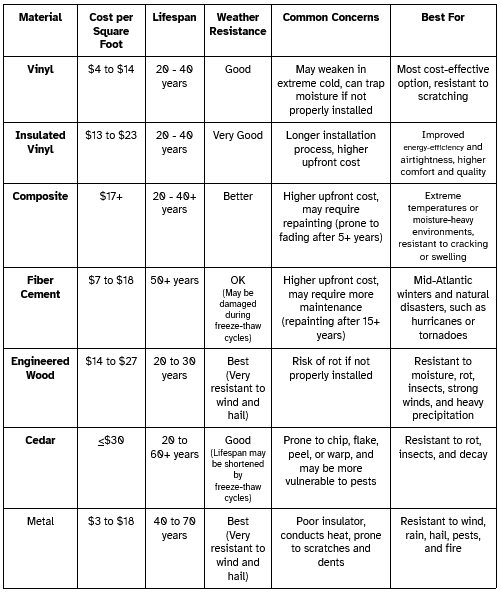
Quick Comparison Chart: Vinyl vs. Composite vs. Wood vs. Metal Siding
Research Price and What Drives Siding Materials Costs
Now that you’ve compared the pros and cons of different vinyl, composite, wood, and metal sidings, you’re one step closer to making a confident, informed decision.
Before you start comparing brands or contacting providers, take some time to assess and decide what matters most to you. Maybe it’s cost, appearance, durability, or upkeep. Next, if you’re ready to learn more about pricing, what drives installation, and materials costs, check out our article, “What’s The True Cost of Siding in Michigan for 2026?”
No matter the material you choose for your home, quality installation is essential. If you’d like to start considering installers, our article “Who Are the Top 5 Siding Installers in Southeastern Michigan in 2026?” offers a comprehensive comparison of local companies.