






Window Replacement: What Southeastern Michigan Homeowners Need to Know about Insert Windows vs. Full Frame Replacements
May 15, 2026 | By Pat Ward
If you’re reading this article, you’ve probably identified a problem with your windows. Maybe the sash sticks when you try to open or close it. Maybe your frame is cracked, or water is leaking in.
You know something needs to change. You might be worrying about hidden damage or wondering if you have to buy a brand-new window. Maybe you’re uncertain about contractor recommendations, or overspending, or frustrated with recurring drafts or leaks. What is the most effective solution, and how much will that cost?
Since 1972, we at C&L Ward have installed more than 140,000 windows for homeowners across Southeast Michigan. We’ve done insert window replacements and full frame replacements. We know when each is the better option, and are happy to share our knowledge to help you make an informed decision.
In this article, you’ll learn what each replacement does, when it’s best used, and compare major differences to help you confidently make the right decision for your home.

Table of Contents
What Is an Insert Window?
Also called a “pocket window,” an insert window is a new window installed within an existing frame. Installing an insert window involves removing the window’s inside and parting stops. From there, the sash is removed, and the sill is prepared for the new insert window.
The new insert window is then installed into the existing frame, and new interior stops are installed.
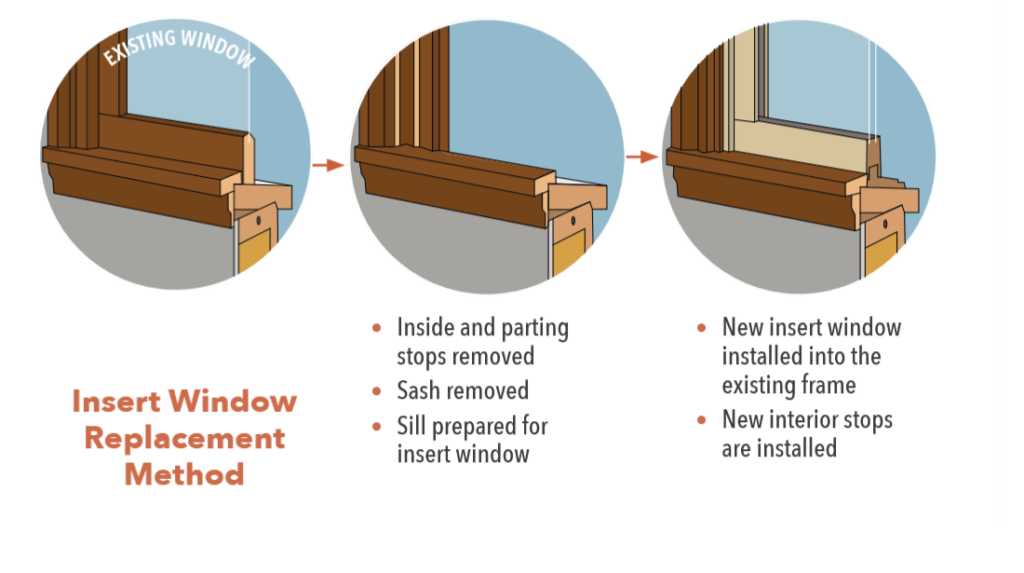
This is a more affordable option, as it preserves the original frame. It will, however, decrease the amount of visible glass by about ½ inch around the perimeter of the insert.
When Is an Insert Window a Good Repair Option?
An insert window can be a good choice when your window frame is still functioning and structurally sound. Insert windows can help to resolve drafts, reduce noise, improve energy efficiency, regulate temperature inside the home, and better protect against UV rays.
If the problem is limited to the glass and sash, a window insert is most likely the solution you need. It is often the most cost-effective option when the existing frame is still in good condition.
Since it is inside the frame, moisture damage can lurk unseen for years. A warped frame, drafts, water intrusion, mold growth, trim or wall damage, and operational problems can be signs it’s time to call in an expert.
What Is Full Frame Replacement?
A full frame replacement is when the entire window, including the sash, trim, and frame, is removed, exposing structural framing materials. The rough opening is then prepared for the new window.
The new window and frame are then installed, and insulation is added around the frame for maximum efficiency. New trim and sill materials are installed, and the replacement is complete.
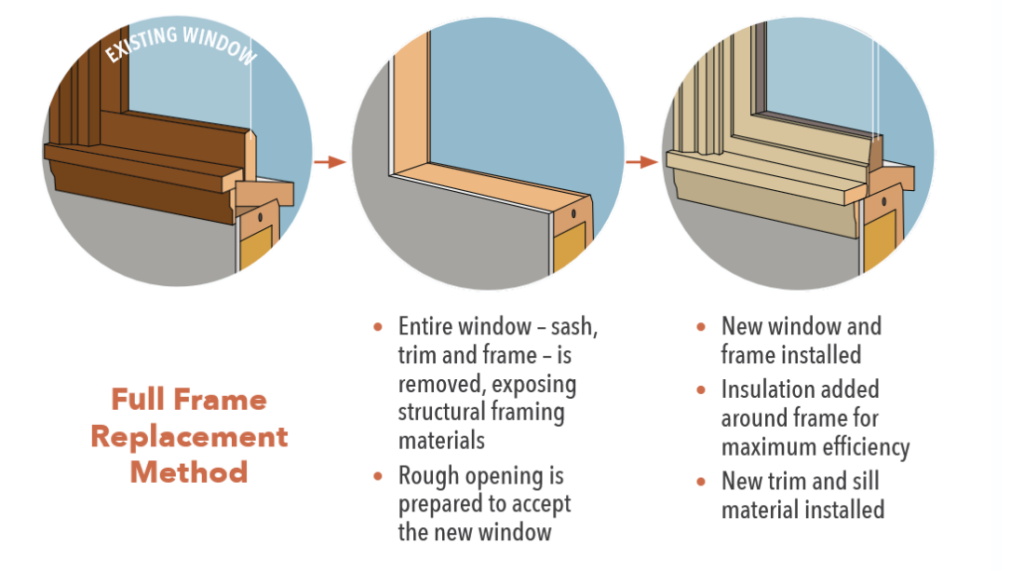
Full frame replacement addresses more than just the glass or sash. It allows the area behind your frame to be inspected for mold or rot, and provides an opportunity to avoid more costs down the road.
A full frame replacement may be more expensive upfront, but an insert window will not resolve underlying issues. These hidden issues will still need to be repaired in the future, and it can be more cost-effective to do one full frame replacement now, rather than an insert window now and a full frame later.
When Is a Full Frame Replacement Necessary?
A full frame replacement is the best choice when your window frame is no longer structurally sound. Like insert windows, full frames can help to resolve drafts, reduce noise, improve energy efficiency, regulate temperature inside the home, and better protect against UV rays.
Full frame replacement also preserves and maximizes the amount of glass in your window. They can address water or structural damage, and added insulation can offer greater energy savings.
Full frame replacement is also the better option if you are expecting to replace the frame ‘someday.’ An insert window is a temporary fix, but it will not resolve deeper issues. Instead, you will end up paying twice—once for the insert window, and again for the full frame.
4 Key Differences of Insert Window vs. Full Frame Replacement
- Cost
An insert window will cost less upfront, and can still offer significant savings. This option is great for minor repairs and typically costs less than half the cost of a full, brand-new replacement window.
- Longevity
A full frame will cost more, as a full window unit is required. Though this option will cost more upfront, it may be the most cost-effective long term. Replacing the window sash, jambs, exterior trim/cladding, insulation around the opening, sill, and/or flashing system one by one will cost a lot more than replacing everything at once.
Addressing many small repairs or a major issue sooner, rather than later, will save you from making continuous fixes that add up over time.

- Appearance
Insert windows preserve the original frame and trim, making inserts a popular choice for historic homes. An insert will cover about ½ an inch of glass, but this tradeoff is often worth it to homeowners looking to preserve irreplaceable features.
A full frame can bring a more modern look to your home with updated trim and frame. It will also allow slightly more light into the home, and restore long-term reliability to your windows.
- Time
An insert window and a full frame can both be installed relatively quickly. An insert may take about 30 minutes per window, depending on accessibility and conditions, whereas an experienced installer can do a full-frame replacement in 4 hours.
However, a full frame may take longer to manufacture and deliver to your home. It’s a bigger piece, and more time and materials are needed to create it.
Quick Comparisons: Pros and Cons of Insert Window vs. Full Frame Replacement
A number of factors can help determine if an insert window or a full frame replacement is best for you. Each decision has pros and cons, though some factors may weigh more than others depending on your preferences and needs.
To help quickly weigh the options, we’ve created a side-by-side comparison of the two replacement methods:

Insert window replacements are often the best choice for fixing broken hardware, worn-out sashes, or for a quick boost in energy savings in an otherwise working frame. If safe to do so, it is a more affordable option, but it will not address water damage, rot, or underlying issues within the frame.
Full frame replacements are necessary to resolve (1) damage to the window frames or (2) damage lurking underneath them. The larger investment is well worth it for improved safety—you don’t want to live with mold growing in your home. It can also help to update outdated looks and bring greater energy savings to your home.
How to Decide: Is an Insert Window or a Full Frame Replacement Best for You?
If you are uncertain whether an insert window replacement or a full frame replacement is best for your circumstances, consider the full pros and cons of each solution.
The following table compares frequent considerations to help you identify which option will best serve you.
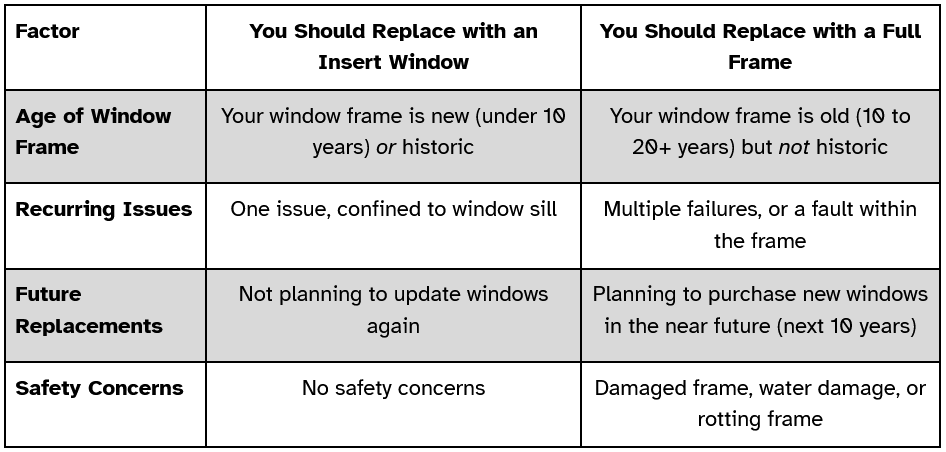
If your window is relatively new (under 10 years old) and the issue is confined to just the glass or sill, an insert window replacement is likely an effective and affordable solution.
If your window is older (10 years or more) and the problem is in the frame, a full window replacement is the only way to fully resolve the issue.
FAQs
What are the differences between full-frame and insert window replacement?
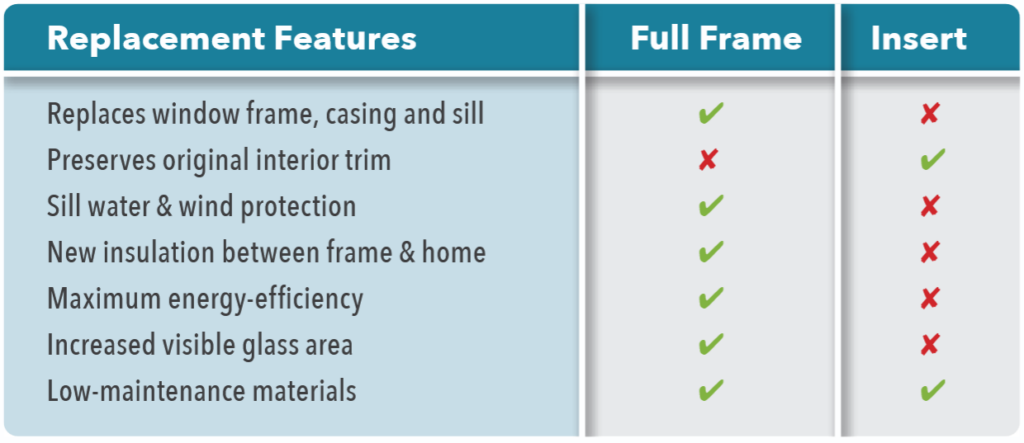
To help quickly assess the differences between full-frame and insert window replacements, we’ve made this comparison table:
Which window replacement is the most energy efficient?
While both insert windows and full-frame replacements can boost energy efficiency, full-frame replacements offer the biggest savings with new insulation.
How much more does a full-frame window replacement cost?
A full-frame replacement typically costs about $600–$1,000 more per window than a pocket replacement. The higher cost comes from added labor, materials, and finishing work—but it often pays off through improved comfort and energy savings.
I have vinyl windows. Can I get an insert window replacement?
Yes, vinyl insert windows are an option, as are composite and wood insert windows. Just be sure your insert window material is the same material as the existing window.
Protecting Yourself With the Right Window Replacement Estimate
Once you have an idea of whether an insert window replacement or a full frame replacement is right for you, it’s time to get an estimate. Whichever you choose, an estimate and an assessment from a licensed expert should help you make the right decision with confidence.
A good contractor will help you make an informed decision. They should take the time to explain the logic behind each decision, and shouldn’t make you feel rushed or pressured.
If you prefer to talk to a window expert as soon as possible, are seeking advice, or are urgently seeking a solution, you can Schedule a Consultation with one of our consultants. We’ll be happy to help you do it once and do it right.