





Asphalt, Metal, or Slate: Which Roofing Material Is Best for Michigan Homes?
May 15, 2026By Pat Ward
It’s time for a new roof. But that’s a big investment. Should your new roof be the same material as your current roof? Or is there a better fit out there for you and your home? What happens if you choose wrong?
Since 2011, we at C&L Ward have been installing roofs across Southeastern Michigan. We started with installing metal roofing and now exclusively install a variety of asphalt shingle roofing systems. We are happy to discuss why each of these options (and more!) could be right or wrong for you.
In this article, we look at asphalt, metal, and slate roofing. This article is simply a breakdown of materials to answer common questions and weigh the pros and cons of asphalt, metal, and slate. It is not a comparison of brands, installation experiences, or providers.
By the time you’re done reading, you’ll know exactly which roofing material makes the most sense for your home and why.
Table of Contents
What Different Roofing Materials are There?
A roofing material you’ve likely heard of is asphalt. Visually appealing, affordable, and easy to install, asphalt shingles are one of the most common roofing materials.
In this article, we’ll also look at SBS Polymer Modified asphalt shingles. While similar to traditional asphalt, SBS shingles are more resistant to damage and more flexible.
Metal roofs are becoming increasingly popular. Though “metal roof” is the umbrella term, these roofs can be made of steel or aluminum, though copper, zinc, and tin may also be used.
A heavier stone, slate shingles are less common than other roofing materials, yet are worth discussing for their aesthetic appeal and durability.
What Do New Asphalt, SBS Asphalt, Metal, and Slate Roofs Cost?
The numbers provided below are just a rough guide. Your true cost may vary based on roof size, complexity, tear-off requirements, and installation details.
- Asphalt:
- Traditional asphalt roofs have the lowest upfront cost, running about $4 to $6 per square foot. This means a new asphalt roof for a 2,000-square-foot home will cost about $8,000 to $12,000, including installation.
- SBS Asphalt:
- SBS lasts longer than traditional asphalt, but costs more upfront. The average SBS roof is about $5 to $10 per square foot, and a 2,000-square-foot home can cost around $20,000, including installation.
- Metal:
- Steel roofs (the least expensive metal) can cost $7 to $15 per square foot, including installation, depending on the style of the material (corrugated, standing seam, or stamped metal) [1]. This means a metal roof on a 2,000-square-foot home could cost $30,000 or more, depending on the metal and style you use.
- Slate:
- Genuine slate shingles require a certain level of craftsmanship to install and run from $15 to $30 per square foot, including installation. This makes slate roofing one of the most expensive roofing options, as it may cost upward of $60,000 for a 2,000-square-foot home.
What’s The Lifespan Of Each Roofing Material?
- Asphalt:
- Asphalt shingles last about 15 to 25 years, depending on the quality of the product and the installation.
- SBS Asphalt:
- SBS asphalt shingles can last 25 to 30 years, depending on the quality of the product and the installation.
- Metal:
- A metal roof can last 40 to 70 years, depending on the quality of the product and the installation.
- Slate:
- A slate roof can last from 50 to more than 100 years, depending on the quality of the product and the installation.
What Type Of Maintenance Is Required for Each Type of Roofing Material?
All roofs require maintenance. Asphalt, SBS asphalt, metal, and slate roofs require nearly identical care. They should be regularly inspected by a professional, especially if you notice any leaks or damage. Broken shingles need to be replaced, and gutters should be cleaned regularly to prevent water damage. Remove any large branches promptly—even if the branch doesn’t damage your roof when it falls, the wood may trap moisture that can damage shingles.
How Weather-Resistant Are Asphalt, SBS, Metal, and Slate Roofs?
All four materials can perform well in Michigan, but installation quality and ventilation matter just as much as material choice.
- Asphalt:
- Asphalt can withstand strong winds, hot summers, cold winters, and even hail. However, proper ventilation is essential. Without it, moisture may become trapped and damage your roof and shingles more quickly.
- SBS Asphalt:
- SBS asphalt shingles offer the same weather-resistant benefits of asphalt shingles with increased flexibility. This flexibility makes SBS shingles less likely to crack during freeze-thaw cycles. These shingles may be slightly heavier, which also gives them more endurance and impact-resistance.
- Metal:
- Metal roofs can also survive strong winds, heavy snow or hail, and debris. If not properly treated or installed, metal roofs can rust in humid climates.
- Slate:
- As a stone, slate is incredibly durable. This means that slate shingles are resistant against hail, strong winds, and extreme weather. Slate roofs aren’t bothered by a freeze-thaw cycle. They are, however, brittle and prone to breaking during transportation and installation.
Common Myths about Asphalt, SBS, Metal, and Slate Roofs
These common myths often lead homeowners to choose the wrong roofing material.
- Myth: “Leaks are the only sign of failure.”
- Fact: While this is a myth for any roof, asphalt roofs can show many signs of damage or wear. Leaks, cracks, curling or missing shingles, damaged flashings, moss or algae, and even age can all be signs that your asphalt roof is in need of attention.
- Myth: “Leaks are the only sign of failure.”
- Myth: “SBS and APP shingles are the same.”
- Fact: While both are forms of modified bitumen asphalt roofing, the modifiers are different. SBS (styrene-butadiene-styrene) is rubber-modified, while APP (atactic polypropylene) is plastic-modified. APP is better for hot climates, while SBS is better suited for cold climates, such as Michigan.
- Myth: “Metal roofs are loud.”
- Fact: Hail and rain can be louder on metal roofs, but a quality installation with good insulation should help to reduce the noise.
- Myth: “Slate roofs are too heavy for most homes.”
- Fact: So long as you hire a good contractor who ensures your home is structurally strong and sound, many houses can support a slate roof.
What Are the Potential Drawbacks of Asphalt, SBS, Metal, and Slate Roofs?
- Asphalt:
- Traditional asphalt roofs are durable, but more prone to damage, including water damage, if not properly installed or maintained. These shingles also have a shorter lifespan than more modern alternatives.
- SBS Asphalt:
- Higher upfront cost than traditional asphalt shingles, may be damaged more easily than a metal roof in harsh conditions, and can leak or hold moisture if not installed correctly.
- Metal:
- Metal roofs can leak if not installed correctly. Without proper insulation, they can also be noisy during rainstorms. In addition to a higher initial cost, metal roofs may also dent in harsh conditions.
- Slate:
- Slate roofs are more expensive than other roofing options, much heavier than other shingles, and more difficult to install and repair.
When Is a Roofing Material the Wrong Fit for Your Home?
- Asphalt:
- If you are in a home you plan to stay in forever, asphalt may not be the best fit for you. Since it will need to be replaced again, SBS may be the better, longer-lasting choice.
- SBS Asphalt:
- If you want a bit more durability and a touch less maintenance, a metal roof may be worth the higher upfront cost. However, if you are renting, or in a home you only plan to stay in short-term, a traditional asphalt roof is likely the more affordable option.
- Metal:
- If you are renting or in a home you only plan to stay in short-term, a metal roof is likely not the best option, given its higher upfront cost.
- Slate:
- If you are not in your forever home, or a home you plan to stay in for a long time, slate is not the choice for you, given the high cost of materials and installation. Unless you like the look, metal and SBS asphalt can offer comparable protection for a fraction of the cost of slate.
When Are Asphalt, SBS, Metal, or Slate Roofs a Great Fit For You?
- Asphalt:
- If you are in a home you don’t plan to stay in for much longer, an asphalt roof may make sense for the lower upfront cost. If properly installed, it can last for years and look beautiful.
- SBS Asphalt:
- If you are in a home you plan to stay in long-term, or your forever home, SBS asphalt shingles can be a great choice for their longer lifespan, improved durability, and lower cost compared to metal or slate.
- Metal:
- If you want even longer durability and slightly less maintenance on your forever home, a metal roof may be the choice for you.
- Slate:
- Given the much higher upfront cost, slate is likely the choice for you if you absolutely love the look and a metal or asphalt roof will simply not meet your specific vision.
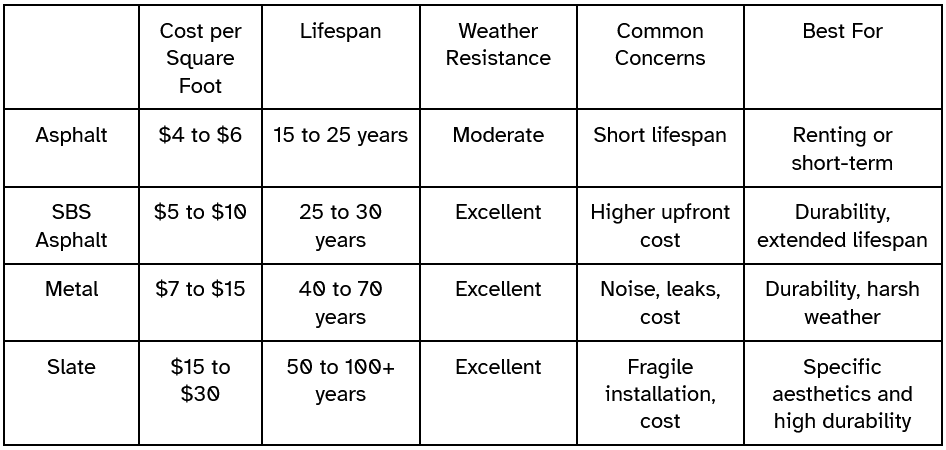
Quick Comparison Chart: Asphalt vs. SBS vs. Metal vs. Slate Roofs
Research Price and What Drives Roofing Materials Costs
The best roofing material isn’t the most expensive; it’s the one that best aligns with how long you plan to stay at your current home, your budget, and how much maintenance you’re willing to handle.
Now that you’ve compared the pros and cons of asphalt, SBS asphalt, metal, and slate roofs, you’re one step closer to making a confident, informed decision.
Before comparing brands or contacting a provider, take a moment to assess what matters most to you—cost, appearance, durability, or upkeep. Then, take a look at our article, “How Much Does a New Roof Really Cost in Michigan for 2026?” if you’d like to learn more about pricing and what drives installation and materials costs.