
Aluminum, Composite, Fiberglass, Vinyl, or Wood Windows: Which Window Type Is Best for Michigan Homes?
Mar 13, 2026By Pat Ward
How do you determine which window material is best? The answer depends on your home.
At C&L Ward, we have installed more than 121,500 replacement windows since 1972. We offer vinyl, composite, and wood windows, and are happy to discuss why each could be right (or wrong!) for you.
This article is simply a breakdown of materials to answer common questions and weigh the pros and cons of aluminum, composite, fiberglass, vinyl, and wood windows. By the end, you’ll know exactly which window material makes the most sense for your home—and why. This is not a comparison of brands, installation experiences, or providers.
You can decide ‘who’ might be installing windows later. Right now, it’s important to know ‘what’ you want installed. Remember, new windows don’t have to be the same type or style as your old windows. Your installer should help you find the best fit—but first, you need to understand what that looks like.
Table of Contents
What Different Window Materials are There?
Windows may be made of vinyl (Polyvinyl Chloride, or “PVC”), composite (a blend of vinyl and wood), or wood (softwood or hardwood). These three options are materials that have proven to be suited to Michigan’s weather.
Windows may also be made of aluminum or fiberglass. We do not recommend aluminum windows or fiberglass windows to Michigan residents. However, we do include them in our analysis to help you understand how aluminum and fiberglass perform in Michigan’s climate.
Aluminum windows have a high thermal conductivity, meaning they are prone to condensation and provide poorer insulation than other materials. Given Michigan’s cold winters and humidity, we do not recommend this material.
We also do not recommend fiberglass windows for Michigan residents. Fiberglass is great at surviving in heat and humidity—making it a nice fit for southern climates—but it is not a window material we recommend to Michigan homeowners, given the similar effectiveness (and superior cost-benefits) of vinyl-and-wood composite windows in the Midwest.
What Do New Vinyl, Composite, Wood, Aluminum, and Fiberglass Windows Cost?
- Vinyl window cost:
- Approximately $1,300 – 1,600 per window, including installation. Cost varies depending on the grade of vinyl.
- With PVC exteriors, vinyl windows are often more inexpensive than their wooden counterparts. PVC has low raw material costs, is easy to melt down, susceptible to mold, and easy to install.[1]
- Composite window cost:
- Approximately $2,700 per window, including installation.
- A blend of vinyl and wood, composite windows cost more than vinyl windows, but offer greater longevity and more flexibility.
- Wood window cost:
- Approximately $3,700 per window, including installation.
- Wood windows cost the most when compared to vinyl or composite, though the price varies depending on the type of wood you select for your home. Softwoods, such as pine, are more inexpensive than hardwoods, such as teak.
- Aluminum window cost:
- Approximately $960 per window, including installation.
- Aluminum windows have a lower upfront cost than most materials, ranging from $270 to $1,650+, depending on size and type.[2]
- Fiberglass window cost:
- Approximately $2,400+ per window, including installation.[3]
- While prices vary by company, fiberglass windows often cost more to manufacture and install than composite windows.
What Type Of Maintenance Is Required for Each Type of Window?
- Vinyl window maintenance:
- Vinyl windows are easy to clean with a vacuum or mild soapy water. Abrasive solvents, silicone sprays, and high-pressure washes should not be used, as they could damage the product.[4]
- Composite window maintenance:
- Similar to vinyl windows, composite windows may be cleaned with mild soapy water, glass cleaner, or multi-purpose cleaners. To avoid damage, do not use abrasive solvents, alcohol-based products, acidic solutions, ketones, or xylene.[5]
- Wood window maintenance:
- Wood windows require slightly more maintenance than vinyl or composite windows. The cleaning process is similar: wood should be wiped with a soft rag and a mild detergent or soapy water. In addition, the wood should be dusted, treated, and polished twice a year to help maintain and protect the material.[6]
- Aluminum window maintenance:
- Aluminum windows can scratch easily, and this includes during cleaning. To clean an aluminum window, use soapy water and a soft cloth or sponge. Avoid abrasive chemicals or tools.
- Aluminum windows also need to be lubricated, especially the spring locks, on a regular basis.[7]
- Fiberglass window maintenance:
- Like vinyl or composite windows, fiberglass windows may be cleaned with non-abrasive materials, mild soaps, and water.
What’s The Lifespan Of Each Window Type in Cold Climates?
- Vinyl window lifespan:
- Vinyl windows are designed to be weather-resistant, an essential feature in Michigan’s four-season climate. With proper care and a high-quality vinyl, these windows can last 20 to 25 years.
- Vinyl may come at a lower cost, but wear and tear can add up. This material is more prone to expanding and contracting, drafts, or warping, and may need to be repaired or replaced sooner.
- Composite window lifespan:
- Wood window lifespan:
- If properly cared for, wood windows may last 20 to 60 years.[10] If neglected, however, the wood may warp or rot, shortening this lifespan to just 15 or 20 years.
- Aluminum window lifespan:
- Aluminum windows last about 20 to 30 years with proper maintenance. Failures are usually a result of corrosion.[11]
- Fiberglass window lifespan:
- Fiberglass windows typically last 30 to 50 years, even with minimal maintenance.
Common Myths About Vinyl, Composite, Wood, Aluminum, and Fiberglass Windows
- Vinyl window myths:
- While vinyl windows are sometimes called the most energy-efficient, there are a variety of factors that can make or break the effectiveness of any window type.
- One big misconception is that vinyl windows are the most energy-efficient. Regardless of material, many other factors, such as window size or glass, can impact efficiency.
- Composite window myths:
- Fibrex® windows are sometimes confused with fiberglass windows. Fibrex® is a blend of 60% wood and 40% polymer, whereas fiberglass is a mix of glass and polymer.[12] While Fibrex® is good for cold climates, fiberglass does well in hot climates.
- Wood window myths:
- Despite being a natural material, wood is not cheap. Pricing has changed over the past decades as wood windows have been innovated and treated to create a stronger and more durable product
- Aluminum window myths:
- Heat loss is a common concern associated with aluminum windows. In fact, it’s a concern we address in this article. While a concern, there are ways an aluminum window can be made more resistant to heat loss. This can include insulation inside the frame, or an aluminum coating over a wood base.
- Fiberglass window myths:
- A fiberglass window can be produced in many different ways. Just because a window is called “fiberglass” does not mean it is sealed or will perform in any specific way.[13] If you are considering a fiberglass option, be sure to ask what is guaranteed and how it will perform in your home.
What Are the Potential Drawbacks of Vinyl, Composite, and Wood Windows?
- Vinyl:
- While vinyl is designed to be more weather-resistant and require less maintenance, Michigan’s extreme weather can cause it to warp or become misshapen over time. Unlike composite materials, once vinyl changes shape, it stays that way.
- While vinyl windows are available in a variety of colors, they are difficult to paint. Vinyl also fades or discolors over time. This can make custom colors tricky, unless you spring for a thermal coating.
- Composite:
- While Fibrex® windows are suitable for cold climates, customization is more limited than vinyl, with just 5 standard exterior colors and 4 standard interior colors. Vinyl windows may be slightly more affordable, but a less durable pick if your home resides in a chillier climate.[14]
- Wood:
- Because of their natural fibers, wood windows are more susceptible to moisture-related issues, including rot, warping, and swelling. This can cause windows to stick or lead to drafts. Regularly maintaining wood windows helps prevent drying and better protects them from UV rays, reducing the risk of damage.[15]
- Aluminum:
- Aluminum is a good conductor, and can become cool or cold to the touch during Midwest winters. This means your home is losing heat and can potentially lead to condensation or interior frost.[16]
- Aluminum windows and water are not friends. Aluminum frames need to be out of reach of sprinklers and thoroughly dried after cleaning in order to avoid oxidation. Salt can also cause aluminum windows to corrode, and even sunlight can discolor the material.[17]
- Fiberglass:
- Fiberglass windows and composite windows both perform well in Midwest climates. However, fiberglass windows tend to have a higher cost than composite windows, making them a less affordable option.
When Is a Window Material the Wrong Fit for Your Home?
- Vinyl:
- If you are in your forever home, vinyl windows might not be the best option. Their colors will eventually fade, and a material more resistant to harsh weather conditions will provide more longevity.
- If you value high customization, vinyl windows might not be the right fit for you. Vinyl windows are available in 7 standard exterior colors, 3 interior wood species, and 3 interior standard colors. However, if you want a specific look, wood or composite windows may provide that touch of elegance.
- Composite:
- If you want the look of wood windows and have the time to maintain them, composite may not be the choice for you. Alternatively, vinyl may be a more cost-effective option, especially if you are renting or flipping a home.
- Wood:
- If you want a lower-cost option or dislike the maintenance required to care for wood windows.
- Aluminum:
- If you live in a coastal and salty area, if you live in a very cold and humid area, or if you live in a very wet area.
- Fiberglass:
- If you are looking for a lower-cost option, or are not in a home you plan to stay in for very long, fiberglass windows may not be the best investment.
When Are Vinyl, Composite, Wood, Aluminum, or Fiberglass Windows a Great Fit For You?
- Vinyl:
- If you are flipping or renting a house, vinyl windows are the most cost-effective option. If you choose to use vinyl windows in a place you plan to stay, know that they may need to be replaced again.
- Composite:
- If you want durability in your forever home at a lower cost, composite windows are an excellent alternative to wood. Lower maintenance makes composite windows ideal for working families, single parents, or retirees.
- Composite windows work well in places like Michigan, where the weather changes often. As temperatures rise and fall, windows expand and contract. The more they do, the more likely they are to fail. Whereas vinyl will stay warped over time, composite reverts to the original shape it was designed to fit, resulting in fewer air drafts and fewer seal failures.
- Wood:
- If you are in your forever home and have the time for a little extra maintenance, wood windows can be cost-effective in the long term. They can also be matched with other elements of your home for a custom, elevated look. For a timeless look, wood windows can be a beautiful addition to your home.
- Wood windows offer a high return on investment, especially in a forever home. They can offer great curb appeal or, depending on what the house looks like on the inside, may be matched to wood trim or cabinets inside the house.
- Aluminum:
- If you live in a dry, non-humid climate and want a low-cost option, aluminum windows can be a great fit, so long as you’re prepared to do a little maintenance.
- Fiberglass:
- If you are in your forever home, don’t mind the higher cost, and want a lower-maintenance option than wood windows, fiberglass windows may work for you.
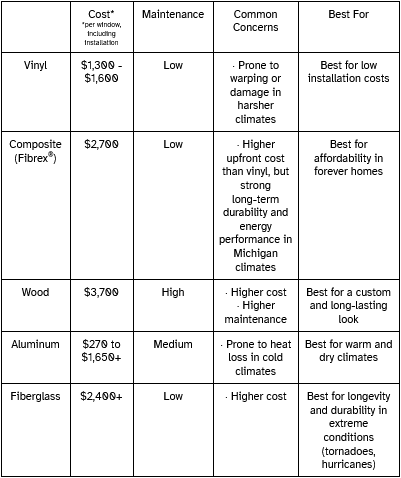
Quick Comparison Chart: Vinyl vs. Composite vs. Wood vs. Aluminum vs. Fiberglass Windows
Research Price and What Drives Materials Costs
Now that you’ve seen the pros and cons of aluminum, composite, fiberglass, vinyl, and wood windows, you’re one step closer to making a confident, informed decision.
Before comparing brands or contacting a provider, take a moment to assess what matters most to you—cost, appearance, durability, or upkeep. Then, take a look at our article, “How Much Do Windows Really Cost in Michigan for 2026?” if you’d like to learn more about pricing and what drives materials costs.