






How Much Do New Decks Cost in Michigan for 2026?
Mar 20, 2026
By Pat Ward
Table of Contents
If your deck is splintering, worn, or faded, it may be time to consider a new deck.
Here at C&L Ward, we expanded into the composite decking industry over a decade ago. In that time, we’ve become experts in what drives cost, what consumers value in a deck, and what materials and features are best equipped to handle Michigan’s hot summers and snowy winters.
In this article, we’ll educate you on what factors impact cost, and evaluate the up-front and long-term costs of different materials. We’ll answer your frequently asked questions and identify what to look for in a contractor to help you learn how to make an informed decision.
How Much Do Composite Decks Really Cost?
The average composite decking project starts around $10,000 when installed by a certified, reputable company. A typical, ground-level deck could fall in the $12,000 to $17,000 range.
This price includes the cost of project permitting, storing materials, installation, and the added protection of any warranties. Other factors, which we explore below, may contribute to and increase your total cost.
What Factors Drive the Cost of Decks?
Materials
For Michigan’s climate, we recommend composite decking made from a blend of plastic and wood. Most other decking installers recommend the same, thanks to the cost-to-durability ratio of composite decking.
A variety of composites are available and, though all are a blend of plastic and wood, exact ratios and specific needs may vary between companies.
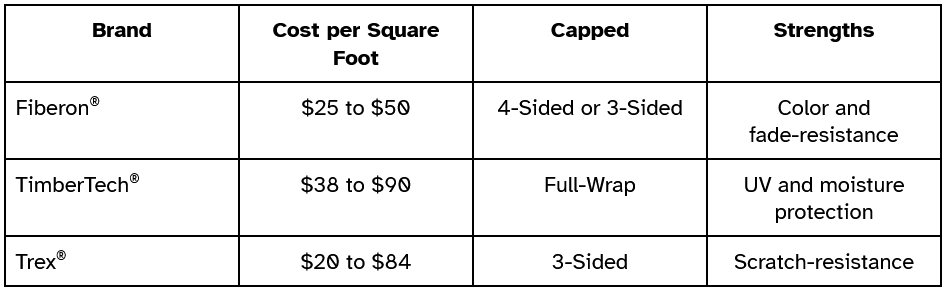
At C&L Ward, we offer Fiberon® composite decking. Other Michigan retailers may offer Trex®, TimberTech®, or their own unique blend, such as Green Shield’s Green Shield composite decking.
Despite these different brands all being composite materials, pricing and features do vary by brand.
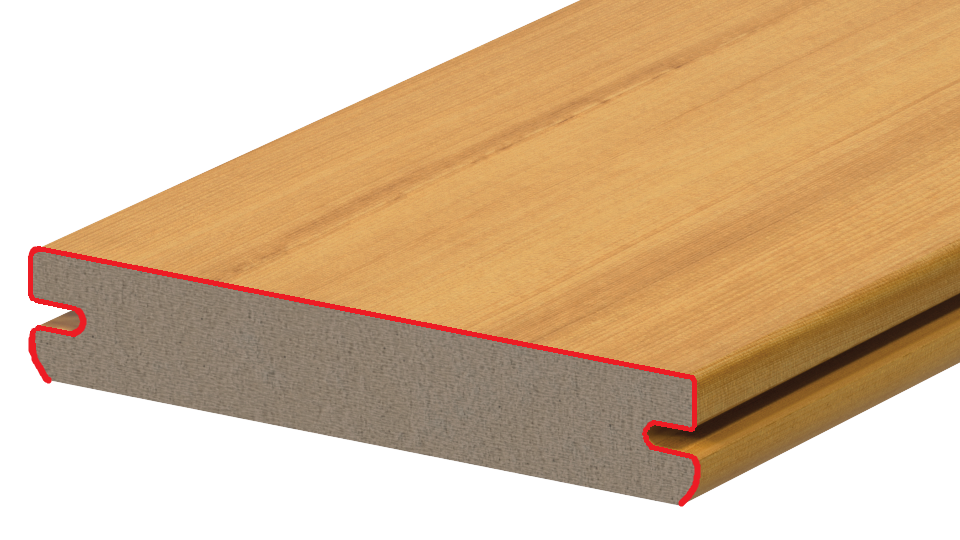
3-Sided capped composite has a protective layer on three surfaces: the top of the board and both sides.
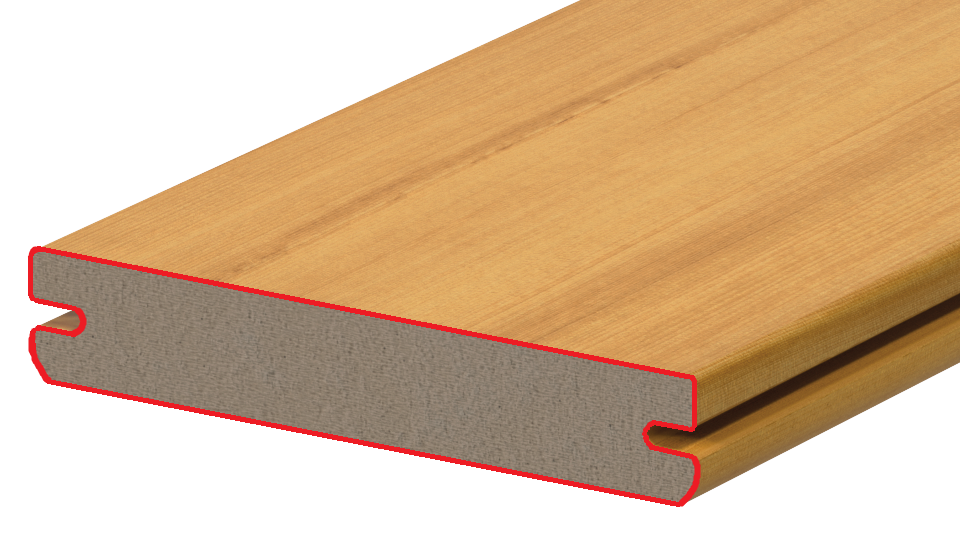
4-Sided or Full-Wrap capped composite has a protective layer on four surfaces: the top of the board, the bottom of the board, and both sides.
While composite is most common, PVC decks and pressure-treated wood decks are still sold. PVC offers excellent waterproofing, though it costs more than other options listed here. We recommend Fiberon PVC decking, which is scratch and fade-resistant, with reflectors in the boards to repel heat.
Pressure-treated wood decks are more resistant to rot and require less maintenance compared to untreated wood, but still require more effort to maintain than a composite deck. Though more affordable upfront, even with proper maintenance, a modern wood deck will have a shorter lifespan than a composite or PVC structure.
The Square Footage Of The Deck
The prices listed in the table above are the average cost per square foot. As decks can vary from home to home in shape and size, this is the standard way to measure and determine costs. The more square footage a project has, the greater the final price will be.
The Height Of The Deck
The taller your deck is, the more the project will cost. This is due to longer installation times, additional safety equipment, and the extra materials needed. The higher your deck, the more stairs are needed, which can quickly increase the total cost.
Additional Decking Features
Your deck may require a railing, which will bring extra material and labor costs. In Michigan, any deck more than 30″ above ground level must have a 36” or higher railing to meet building and safety codes.
Built-in lights on steps or under railings, pergolas, and built-in benches or seating are all optional features that may be installed for an extra cost as well.
Permits and Inspections
A deck is a construction project, meaning you will need a permit to build a new deck or alter an existing one. Your city may also inspect the project once it is complete. When deciding on a deck installer, ask if these costs are included in the quote.
New Deck vs. Resurfacing an Existing Deck
A new deck will cost more than resurfacing an existing deck. Resurfacing a deck involves replacing visible parts of an existing deck that are wearing or fading. This could include decking boards, railings, or stairs. During resurfacing, the deck’s frame and foundation are kept intact.
If you currently have wood and are resurfacing to composite, you need to make sure your framing can handle the new material.
If your deck has a strong frame and foundation, resurfacing may be the best option for you. If you have a wood deck and are tired of the constant maintenance, you may consider switching to composite.
If the frame and/or foundation of your deck are deteriorating, a new deck is the way to go.
If your wood deck is over 10-15 years old, resurfacing is typically not a valid option for code compliance.
When You Do NOT Need to Replace Your Deck
If your deck’s layout is working for you and the frame and foundation are in good condition, you do not need to replace your deck. In this case, resurfacing would be the most cost-effective solution.
Instead, refinishing may be the best choice if boards are fading, worn, or splintering.
Or, if you have a wood deck that is faded but not splintered or rotting, a new coat of stain may be the choice for you.
How Does Composite Vs. Wood Decking Cost Compare Over Time?
With an average price range of $15 to $75 per square foot, or $4,000 to $12,000 for a full deck[1], some pressure-treated wood decks may seem more cost-effective at first. However, these wooden decks need to be resealed every two years, which costs time and materials.
Though they may have similar up-front costs, wooden decks may require more careful cleaning, whereas water-resistant composite decking can simply be hosed off or power-washed.
Many composites are made of recycled wood and recycled plastic, which helps to keep the cost of material down. Built to be more durable, a composite deck can last for decades with minimal maintenance or additional care.

How to Compare Deck Quotes (And Avoid Overpaying)
- Create a quote checklist. Consider your budget, style, size, cost, installer experience, and reviews.
- Make a quote comparison, noting which costs each estimate includes or what costs are not included. Consider warranties, longevity, and maintenance costs.
- Look out for any red flags when choosing an installer. The business should handle permitting, and you should be wary of one that asks you to obtain a permit or does not include the cost in their quote. A credible business should be licensed and insured. Be sure to check reviews, look at past work, and don’t make any payments without a clear contract.
- Ask installers whether they use in-house crews or subcontractors, what product and workmanship warranties are included, and if the cost to demolish and dispose of your current deck is included.
- Consider prices carefully. A lower payment for a poor install now could cost you more in the future, but you also shouldn’t overpay for a product. Hear multiple quotes and estimates, ideally from your top three choices.
Deck Financing: A Quick Overview
Many businesses will offer a variety of financing options to best suit your budget and needs. Exercise caution when deciding on a financing plan, should you choose to use one. If a project is out of your budget in the present, don’t force it.
A low payment upfront may come with a long-term interest cost. Be sure to read and understand all details and conditions carefully before signing any financing plans.
FAQs About Deck Costs in Michigan
Q: How much does it cost to build a deck in Michigan?
A: The average large (20×20 ft) composite deck in Michigan costs around $12,000 to $25,000+. The average large (20×20 ft) wood deck in Michigan costs $15,000 to $25,000+.[2]
Q: Will a new deck increase my home’s resale value?
A: It depends. If your home currently has no deck or a deck in need of repairs, installing one may increase your resale value. A deck with (in)visible damage may hurt your resale value. However, if your home currently has a deck in good condition, a new deck may not make as much of an impact.
Q: Does the season affect the cost of a deck?
A: It may! While decking materials are durable and can be installed year-round, labor demands peak in the late spring and early summer. As demand picks up, the cost of materials may rise to match.
Q: How much does it cost to refinish a deck?
A: Refinishing includes cleaning, sanding, staining, and sealing a deck that is otherwise in good condition.
It costs around $1.75 to $4 per square foot for a professional to refinish a well-maintained deck, or $6 per square foot for a deck in rough condition. Railings are an additional $4 to $12 (new or like-new) or $6 to $16 per linear foot.[3]
This comes to about $400 for a 100-square-foot deck with no railing.
Q: How much does it cost to resurface a deck?
A: Resurfacing often entails new deck boards and a new rail, but does not require any work to the frame. Resurfacing typically costs $15 (wood) to $50 (composite, PVC) per square foot.[4]
How to Get an Accurate Deck Quote for Your Home
We hope this article has given you a better understanding of what drives the cost of decks and how different materials vary in maintenance and cost of care.
Ignoring a rotting, splintering, or damaged deck may lead to injuries or higher repair costs if the damage continues to spread.
Taking action now can help you to improve the safety of your deck and to start saving on maintenance costs today.
If you’re ready to start looking at estimates, we offer a free online Deck Price Calculator.