You know you need a deck and probably have a specific use in mind. Maybe you’re looking forward to grilling dinner for the family and enjoying a meal outdoors. Maybe you’re itching to host a party, have a place for the grandkids to play, or create a place to just relax.
Basic decking options include choosing a material and color for your boards. But what about stairs, railings, and other customizations to truly make your deck fit your home and needs?
At C&L Ward, we’ve helped more than 2,250 homeowners bring their dream decks to life. As Fiberon Certified Installers and Outdoor Ambassadors, including our North American Deck and Railing Association Certified consultants, we can build just about anything.
In this article, we’ll explore C&L Ward’s custom decking options so you can assess which—if any—are worth the investment for you and your home.
Table of Contents
Patterns and Inlays
We promise a beautiful result no matter which style you choose. Our standard decks come with a matching border around your deck. Some homeowners prefer to add character with custom inlays, or by combining complementary boards to make their space stand out.
A deck with border boards, which frame your deck in the same primary color.
Patterns
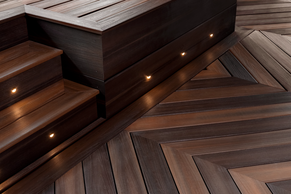
Deck boards can be cut, arranged, and installed to create visually interesting patterns, such as a herringbone design.
“Picture frame” or “two-tone” decks
In addition to visual interest, they can help to create sections/zones or identify places to watch your step; contrast can be easier to see.
It is important to note that the use of the word “framing” here does not refer to the frame of your deck as in “the underlying support structure.” “Picture framing” is simply a border board around the entire deck in a secondary color, creating an outline.
Border Stair Tread
Border stair tread is when individual steps are “picture framed” to make each stair more visibly apparent and hide board edges.
Ribbon Board
A “ribbon board” helps to eliminate joints and offers a smooth transition between boards.
A ribbon board can be the same color as, or a different color from, the main deck to either blend in or create designated sections.
Railing
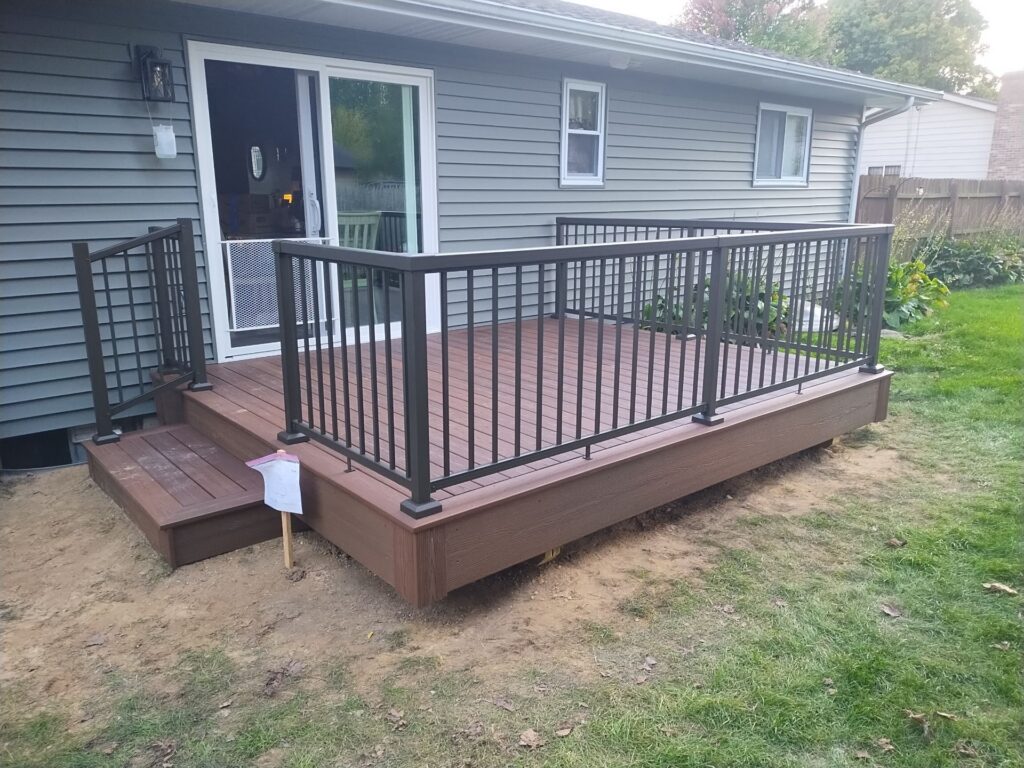
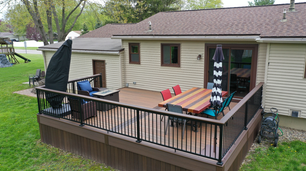
The Americans with Disabilities Act (ADA) requires a railing after four rises. Michigan building codes require any deck 30” above the ground (or more) to have a railing. At C&L Ward, we offer composite, aluminum, or glass railing options.
Aluminum Cable Railing (Vista)
Aluminum railings frame stainless steel cables to create an enclosed space with minimal interruptions to your view.
Aluminum Framed Glass Railing (Vista)
The actual railing posts are made out of composite and aluminum, available in white, black, or bronze.
Powder-coated aluminum rails frame the glass panels for an uninterrupted view.
Aluminum Picket Railing (Vista)
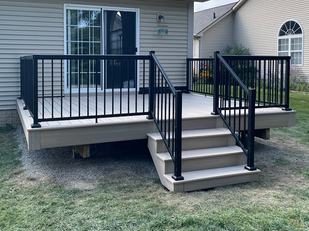
White, black, or bronze aluminum railings. Powder-coated to resist rust, and available with traditional or contemporary rails and smooth posts.
Composite Railing (HavenView)
Composite railings are our most customizable option. Railings are available in traditional, classic, deluxe, and regency profiles. Posts may be topped with pyramid, flat or lighted caps. Color selections include white, black, or brown.
Drink Railing (Vista)
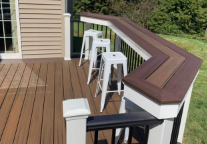
A “drink railing” isn’t a railing in and of itself, but an optional upgrade that can connect on top of your Vista aluminum railing. This option can’t be used with composite railings.
A flat deck board that is customized to be screwed on top of the existing aluminum railing. The drink railing matches your deck and creates a smooth, functional space.
You can learn more about the railings C&L Ward offers on our Deck: Railing page.
Lighting
Lights can make your deck easy to navigate even during the darkest of nights while also being aesthetically pleasing and tying the whole deck together. Our lighting options are available in white, browns, bronze, and black to match your chosen deck or railing.
Post Cap Light
Our composite post cap lights provide a warm, seamless glow for late nights on the patio.
Side Post Light
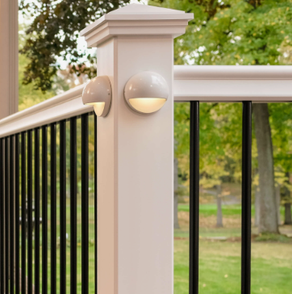
Side post lights are designed to light the edge of your deck and stairways, while blending in with posts.
Accent Light or Surface Deck Light
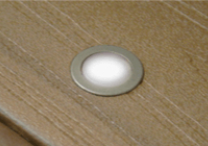
These small, LED bulbs sit flush along the border of your deck or stairs to provide a warm glow.
Riser Light
Riser lights help to illuminate steps and stairs without obstructing your walkway.
You can learn more about the lighting options C&L Ward offers on our Deck: Lighting page.
Skirting
Skirting or fascia covers the sides of your deck and hides the underlying structure from view. This can create a more finished look and help keep animals out of your deck’s foundation.
Traditional or Single Fascia
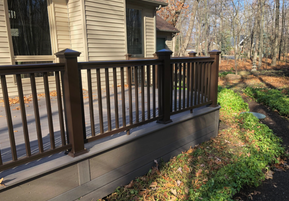
This is the default, standard option. This deck is shown for reference and does not feature any custom fascia. Notice how the single board wraps around the side of the deck.
Double Fascia
Rather than just one board covering the side of your deck, double fascia adds on a second board to cover any posts and joints on raised decks, or ensure that ground-level decks sit flush with the earth.
Horizontal Skirting
In this skirting, boards run parallel to the ground along the length of your deck.
Vertical Skirting
The boards in this skirting run up and down, rather than parallel to the ground.
Lattice
Lattice helps enclose the gap under your deck without fully obstructing it, as skirting does. It’s aesthetic and hides the frame, but still allows for ventilation.
C&L Ward offers vinyl or aluminum lattice in black or white.
Drainage
This feature isn’t available on ground-level decks, but is a great option for multi-level projects. An under-deck drainage system stops water from falling between deck boards. The water is then directed to a gutter that runs along a deck post to the ground. This allows you to enjoy the space under your deck in the rain without getting wet, or to clean an upper layer of your deck without worrying about any items below.
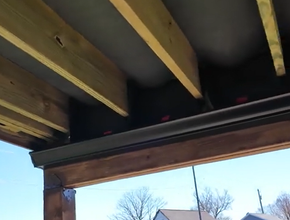
The underside of a deck without a drainage system.
A deck with an under deck drainage system installed.
Pergolas help to provide shade without fully obstructing natural light. Available in white and black, as well as different styles, our deck coverings use slanted boards to help shield you—and your deck—from direct sunlight, keeping you and your space cooler on hot summer days.
We offer three different shade options with our pergolas: 50%, 75%, and 90%.
You can learn more about pergolas and covered decks on C&L Ward’s Covered Deck Builders page.
Built-in Furniture
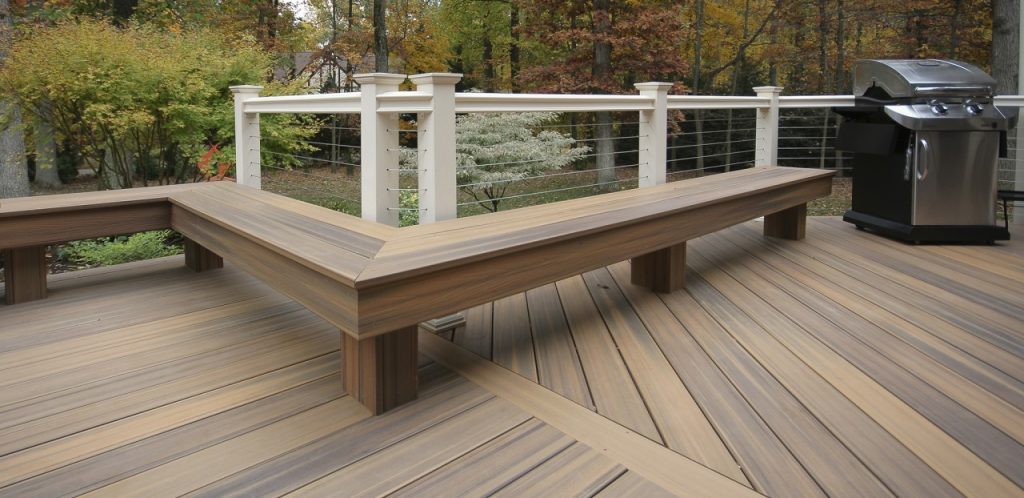
Custom-built furniture is a great way to match your deck’s aesthetic and keep the no-maintenance trend going. Built-in benches make it easy to relax, sitting bars offer an easy place to eat, and serving bars help you entertain—all with the same durability as your deck boards.
Built-in Bench
Sitting Bar
Serving Bar
Planters and Landscaping
You can bring your garden right up to your deck—or even on top of it! C&L Ward can build custom planters to protect your deck (and keep plants out of reach from pests). We also offer weedblocker, which we can install around the perimeter of your deck for future flowerbeds. We can also put weedblocker down under your deck and lay pea rock on top of it.
Planter
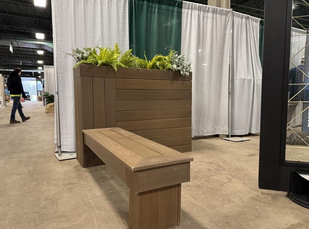
Flower pots and iron flowerpot stands can stain your Fiberon deck boards. Built-in planters are a great workaround, allowing you to keep your flowers raised and on your deck, without risking unnecessary damage.
Landscaping
At C&L Ward, we’re upfront about the fact that we don’t offer full landscaping services. We do, however, offer weed blocker and pea gravel to line your deck.
Privacy Walls and Fence Gates
Privacy walls, fences, and gates can serve as a way to make your deck feel like a private escape, even in the busiest of neighborhoods. Beyond privacy, they also function as a safety feature, keeping little ones away from open pools, air conditioners, or other dangers.
Privacy Fence
A privacy fence is a long, continuous structure that shields a large portion or all of your deck. It can make an outdoor space feel private while welcoming sunlight and fresh air.
A privacy fence shelters patio tables and chairs from view.
Privacy Wall
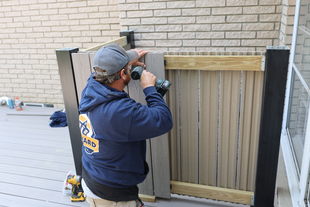
A privacy wall is a smaller structure, typically just one or two panels that obstruct visibility into your space. They are common around hot tubs, but may also be used to hide unsightly objects. C&L Ward has used privacy walls to make AC units less obvious, while still leaving space for the unit to be accessible and functional.
A C&L Ward installer builds a privacy fence around an AC unit to hide it from view.
Gates
A gate doesn’t provide the same level of shelter as a privacy wall or fence, but it does help enclose your space and provide an extra layer of safety. Our gates are especially popular around decks with pool access, or for families with small children or pets who want a secure place to play.
A gate blocks the staircase leading to a deck surrounding a pool.
Shape
Your deck doesn’t have to be confined to a rectangle or a square. We can build custom shapes, whether that be a curve to follow a sidewalk or to fit around a pool.
A deck extends to be flush with an above-ground pool.
A deck features a curved corner, rather than a 45-degree angle.
Raised and Multi-Level Decks
Your deck doesn’t have to be built at ground level, or even confined to one level at all. Raised and multi-level decks allow you to connect your home to the great outdoors in a variety of ways, giving you more square footage as needed.
Raised Deck
There are two types of raised decks. One is a mild lift, which elevates your deck just a few feet off the ground.
Raised Deck (with Patio)
The other type of raised deck covers a patio underneath, giving you space on two levels of your home.
Multi-Level Deck
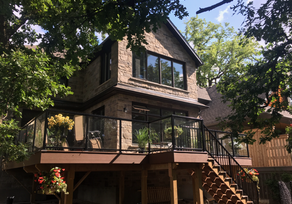
A multi-level deck offers more than one platform and can extend up or down. The levels are connected by stairs for easy movement. These decks can extend out into your yard, or wrap around and follow the shape of your home.
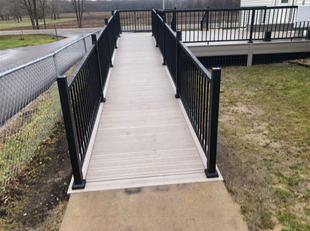
Steps, stairs, and ramps have a variety of uses depending on where they are installed. A grand staircase could lead from your raised deck to your yard. A few steps could make it easier to climb into a hot tub, or transition from the grass to a ground-level deck. A ramp can make accessing your deck even easier, with customizations to match your home.
Ramps
Some homeowners prefer to have a ramp installed alongside their stairs. Many of our same options are available for both: ramps can have the same railings, lights, patterns, and border tread offered above.
On-Deck Steps
This article mentions stairs (such as those that lead from your deck to the ground, or from one level to another) above.
Steps are also available on top of your deck, making it easier to access a hot tub or step through your patio door.
Precast Systems
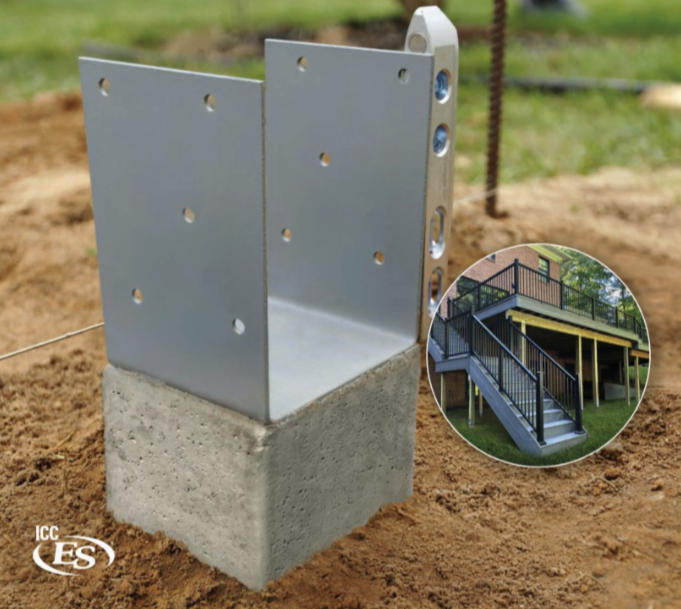
Even if it’s rated for ground usage, treated lumber will eventually rot out. To combat this, C&L Ward uses a precast system for deck frames when possible. Instead of burying exposed wood in the earth, we use a concrete base that provides support while keeping the wood above ground.
Built Right
Everlast
Price Your Project
If you would like more information about decking services, replacing your windows, or any home remodeling needs, visit goclward.com and Schedule a Consultation with a C&L Ward product expert.
The company also offers an online cost estimator tool, where you can answer just a few questions and get an instant range of what your project could cost.